Jnana Kanda vs Reiki vs Other Energy Healing Modalities
Reiki, pranic healing, Theta and sound work are attunements or techniques that can usually be learned in modules, often quickly and often online. Jnana Kanda is a living transmission inside an unbroken Balinese lineage carried by a Grand Master: it requires melukat water purification first, offerings that ask permission of nature, and shaktipat given in person. The difference is not power — it is lineage, preparation, and a whole culture of daily offerings and realignment with nature standing behind it. All of these are complementary practices, not medical treatments.
If you are comparing energy healing modalities, you will find that most of them describe the same thing in different words: a practitioner, a field, a state of deep rest. What actually separates them is rarely discussed — where the practice comes from, who stands behind it, and what has to happen before you are allowed to receive it.
Reiki: Attunement in Levels
Reiki is a Japanese system organised into levels, with symbols and hand positions, and an attunement given by a Reiki master. It is generous, gentle and widely available — you can be a Level 1 practitioner in a weekend. Its strength is accessibility. Its limitation is that the tradition has been copied so many times that the depth of a training now depends almost entirely on the individual teacher.
Pranic, Theta, Quantum, Sound: Technique-Led Approaches
Pranic healing works with sweeping and energising protocols; Theta works with brainwave states and belief change; quantum and sound approaches work with intention, frequency and vibration. These are technique-led: learn the protocol, apply the protocol. They can be genuinely relaxing and useful. But a technique can be learned from a manual, and nothing in the method itself asks you to be prepared, purified, or accountable to a lineage.
Jnana Kanda: Transmission Inside a Living Lineage
Jnana Kanda is not a protocol. It is a living transmission of sacred energy and higher awareness, carried today by Grand Master Mahaguru Mangku Alit Ajna and passed on directly, teacher to student. There is no module list to complete. There is a person who holds the lineage, a preparation you must go through, and a moment — shaktipat — in which something is given rather than taught.
What Comes Before: Melukat and Offerings
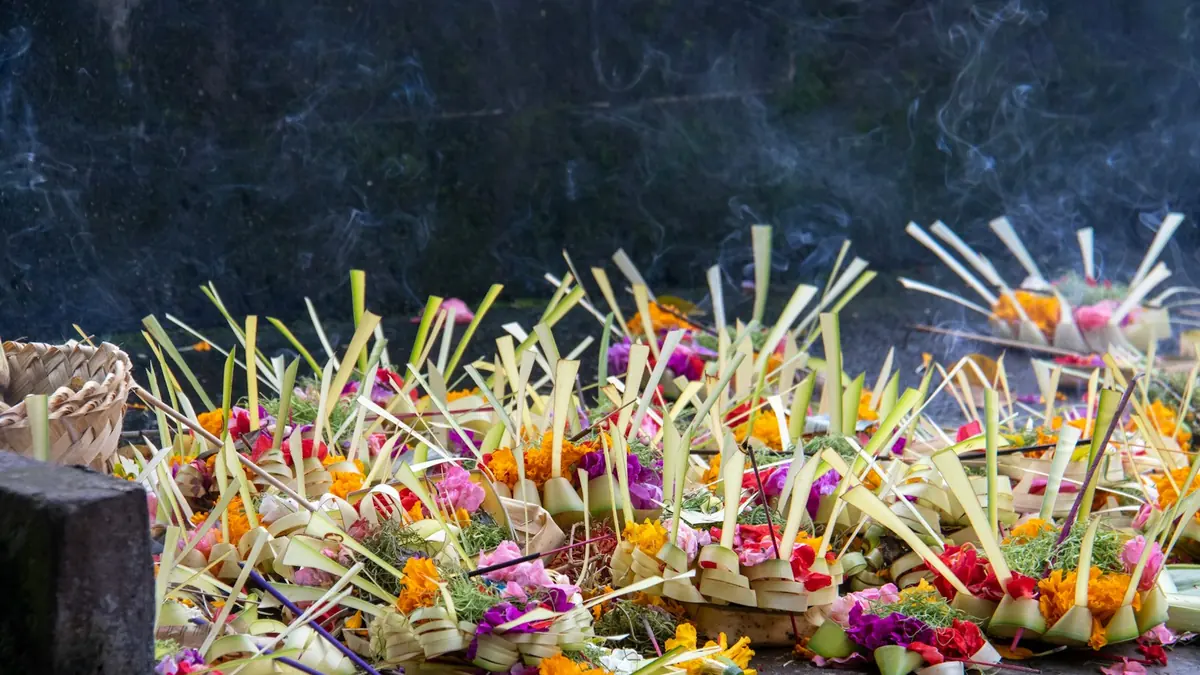
This is the part no comparison chart shows. Before transmission there is melukat, purification in living water — Bali is a water-based culture, and water is treated as an ancestor, not a resource. And there are offerings: canang sari placed every single morning, all across the island, for more than a thousand years. Offerings are how permission is asked and how the work is made lawful with nature. You do not simply take energy in this tradition; it is granted, inside an agreement.
“Most modalities teach you a method. A lineage prepares you, then gives you something.”
The Values That Travel With It
The highest traditional values are part of the transmission itself: humility, honesty, service, respect for nature and for the student’s own timing. Nothing is forced, nothing is dramatised, and no promise is made about outcomes. That restraint is not marketing weakness — it is what a thousand years of accountability looks like.
So Which One Should You Choose?
If you want an accessible first step, Reiki or a sound session is a beautiful door. If you are drawn to depth, to a real lineage, and to realigning your whole life with nature rather than adding one more technique, Jnana Kanda is that path. Both are complementary practices for wellbeing and personal development, and neither replaces medical care.
Where to Experience It
Mathieu Sun (Sky Element) teaches Jnana Kanda in this lineage as a two full-day, in-person transmission, and also offers individual energy sessions in Antibes – Juan-les-Pins and online for those who simply want to feel the work first.