Why Do I Feel Like a Sponge for Other People's Stress?
You feel like a sponge for other people's stress because your nervous system is finely tuned to others and often learned early to stay alert to their moods. Stress is contagious: bodies naturally synchronise, and a sensitive body synchronises faster and holds on longer, often in the solar plexus, shoulders or jaw. The answer is to wring the sponge out every day — water, long exhales, grounding — and, when stress has built up for a long time, to receive a Jnana Kanda session that purifies what you have absorbed.
Your partner comes home tense and within minutes your stomach is tight. A colleague panics about a deadline and suddenly your heart is racing. A friend calls in crisis and you can't sleep that night. The stress wasn't yours — but now you're carrying it. Why?
Stress is contagious
Human bodies are designed to synchronise. We unconsciously pick up each other's breathing, tone of voice and muscle tension; it is how groups stay safe together. In most people, this effect fades quickly. In sensitive people it is stronger, faster and lasts longer. Your body reads the stress in the room and prepares as if the danger were your own.
Where the pattern comes from
- The caregiver role: many sponges were the ones who kept the peace at home as children.
- A nervous system on alert: years of scanning for tension make you react before you think.
- Responsibility: you feel that if someone near you suffers, you must do something.
- No release: you take in stress all day but rarely let it out.
Where absorbed stress hides in the body
Most people I work with feel it in the solar plexus — a knot just below the chest. Others feel it in the jaw, the shoulders, the throat or the belly. Noticing where it sits is the first step to letting it go.
“A sponge is not a problem. A sponge that is never wrung out is.”
How to wring out the sponge every day
- Hand on the solar plexus: breathe into your hand and ask, “Whose stress is this?”
- Long exhales: breathe out twice as long as you breathe in, ten times. It tells your body the danger isn't yours.
- Water: wash your hands, wrists and face slowly, or take a shower with the intention to release.
- Shake it off: shake your hands and arms for thirty seconds, like animals do after a scare.
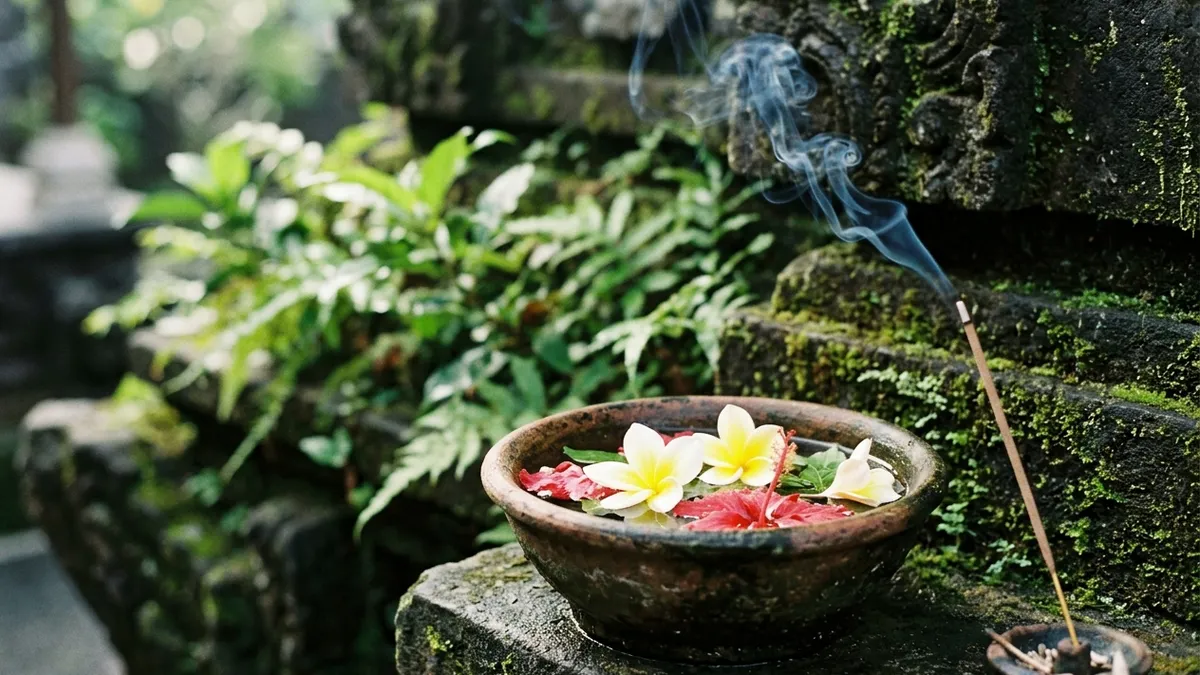
- A small ritual: light incense, place a flower, and give the day back to nature.
The Jnana Kanda approach
In the Balinese lineage of Grand Master Mahaguru Mangku Alit Ajna, what is heavy is first given to water — this is melukat, the purification that opens every Jnana Kanda training. In a session, I act as a channel of that sacred energy: absorbed stress is released, the nervous system settles, and your body remembers that it is safe. For the full picture of being an energetic sponge, read Why do I absorb everyone else's energy?.
Frequently asked questions
Is it possible to be empathic without absorbing stress?
Yes. With grounding and regular clearing, you can still feel people deeply while their stress passes through you instead of staying.
Why do I feel other people's anxiety so physically?
Because stress is carried by the body — breath, muscles, heartbeat. A sensitive body mirrors it. If anxiety symptoms persist, please see your doctor too.
Can a session help with absorbed stress?
Many people feel their body release and their breath deepen during the session, and a calmer baseline in the days after.
Let go of what isn't yours
I, Mathieu Sun, receive you in person in Antibes – Juan-les-Pins, at home in Cannes or Monaco, or online by Zoom. Call or WhatsApp +33 6 22 35 48 72.
Energy sessions are a complementary wellbeing practice, not a medical treatment, and never replace your doctor's advice.
Book a session to release absorbed stress →