Acupressure vs. Energy Healing: Which Approach Fits You?
Acupressure applies manual pressure to specific points on the body, within a framework drawn from traditional Chinese medicine. Energy healing, including Jnana Kanda, is a broader family of practices that work with the body's vital energy, often without a set point protocol and sometimes without touch. Neither is automatically better. The right choice depends on whether you want a hands-on, point-based technique or a practice centred on consent, presence and your own readiness to receive.
Acupressure and energy healing are not the same thing, although they are often placed side by side. Acupressure is a hands-on practice: a person applies pressure with fingers, palms, elbows or simple tools to specific points on the body, following a framework that comes from traditional Chinese medicine (TCM). Energy healing is a much wider family of practices that work with the body's vital energy. Neither is automatically better. What matters is what you are looking for, whether you prefer a hands-on approach or an entirely touchless one, and whether the approach respects you as a person.
This article describes acupressure according to its own tradition, then compares it with Jnana Kanda, the Balinese energy practice that Mathieu SUN teaches and practises. It also separates what is established, what is traditional belief, and what has no scientific confirmation. Both approaches are complementary practices for wellbeing, not medical treatments.
What is acupressure?
Acupressure is a manual technique in which pressure is applied to specific locations on the body, usually called acupoints. It is often described as a non-invasive relative of acupuncture, which uses fine needles at similar points. The pressure may be steady, circular or rhythmic, and is typically applied with thumbs, fingers, palms or elbows, sometimes with small tools.
Acupressure belongs to the larger system of traditional Chinese medicine. In that framework, vital energy known as qi is understood to move through pathways called meridians, and points along those pathways are seen as places where the flow can be influenced. This is the tradition's own explanation. Meridians and qi, as described in TCM, have not been confirmed as measurable anatomical structures by modern biomedicine, and it is fair to say so while still describing the tradition accurately.
If you want to understand how this relates to needle-based work, the article acupuncture vs. energy healing and Jnana Kanda covers that neighbouring practice in the same way.
Shiatsu and other forms
Shiatsu is a Japanese bodywork form, developed in the twentieth century, that draws on TCM ideas and on other manual therapies. The practitioner uses finger, thumb and palm pressure, along with stretches, usually with the recipient clothed and lying on a mat or low table. Other regional traditions also use point pressure, so "acupressure" is better understood as a family of methods than a single standardised technique.
Self-acupressure
One reason acupressure is popular is that people can learn simple versions themselves. Self-acupressure usually means pressing points on the hands, wrists, feet, head or ears, often for relaxation or everyday discomfort. It is accessible and low-cost. It is sensible to learn it from a qualified teacher or a reliable source, and to be careful in situations such as pregnancy, injury or ongoing medical conditions, where some points are traditionally avoided.
What does the evidence say about acupressure?
Research into acupressure and related practices such as acupuncture exists, but its quality and consistency vary. Some studies have explored uses such as relief of nausea or certain types of pain, with mixed results and varying study quality. Because findings differ and are still debated, it is more honest to say that acupressure may help some people feel more relaxed or more comfortable than to promise specific outcomes. For health concerns, a qualified medical professional remains the right first step, and acupressure is best seen as something that can sit alongside that care.
What is Jnana Kanda?
Jnana Kanda is a traditional Balinese energy practice, carried today as a living lineage by Grandmaster Mahaguru Mangku Alit Ajna. Mathieu SUN trained with him and received direct transmission from him, known as shaktipat. If you are new to it, what is Jnana Kanda offers a fuller introduction.
According to the teaching, most human difficulties relate to three interconnected dimensions: the body, energy and the mind. Energy is seen as the bridge between the other two. The tradition holds that imbalance often begins in subtler layers before it shows up in the body, and that calming the mind can allow energy to rebalance, with the body following. The body is described as the vehicle, energy as the fuel and the mind as the driver.
In this view, the body has its own inner intelligence and capacity to self-regulate. Stress, emotional burden and energetic disturbance can interfere with it. Jnana Kanda is described as removing that interference so natural intelligence can function, so that healing is something remembered rather than imposed from outside. These are the tradition's teachings, not scientific claims.
How do acupressure and Jnana Kanda compare?
Both practices take the idea of vital energy seriously, and both are used as complementary approaches to wellbeing. They differ in method, in the role of touch, and in how they are learned. The table below summarises these differences as each tradition describes itself.
| Aspect | Acupressure | Jnana Kanda |
|---|---|---|
| Origin | Traditional Chinese medicine; related forms such as shiatsu developed in Japan | Balinese energy practice, a living lineage carried today by Grandmaster Mahaguru Mangku Alit Ajna |
| Core idea | Qi flows through meridians; pressing specific points may influence that flow | Body, energy and mind are one field; a pure, intelligent energy is received and transmitted, and restores harmony without force |
| Role of touch | Central: the technique is physical pressure | Not required; the practitioner does not apply pressure to points, and the work can take place at a distance |
| Technique or protocol | Point selection and pressure methods, often based on a diagnostic framework | No fixed point protocol and no fixed posture; the practitioner is a vessel rather than the source |
| Posture | Recipient usually lies or sits in a position that gives access to the points | Sitting, standing or lying down; the body follows the energy |
| Practitioner's training | Study of points, meridians and technique, often through formal courses | Shaktipat transmission from the Grandmaster, then practice sustained by mind, heart and breath |
| Role of the recipient | Receives pressure; can also learn self-acupressure | Openness, willingness and conscious consent are essential |
| Distance | Needs physical presence, except for self-application | Described by the tradition as not limited by distance or time; online sessions are possible |
| Relationship to medicine | Complementary; evidence is mixed and still debated | Complementary; does not replace medical care |
Touch, technique and training: where they really differ
The role of physical touch
In acupressure, touch is the method. The pressure itself, its depth, its duration and its location are what the practitioner works with. Many people find this grounding: you feel something concrete, and the relaxation of tension in the muscles can be noticeable. This is similar to what people often appreciate in bodywork generally, and the comparison with massage and Jnana Kanda explores that side of things in detail.
Jnana Kanda is entirely touchless: there is no physical contact at all. Posture or movement may sometimes be guided simply to make the process visible, but the teaching is clear that in stillness the energy still moves. For people who dislike being touched, or who are in a situation where touch is difficult, this is a meaningful difference.
Technique versus state of being
Acupressure can be described largely as a technique: there are points, methods of pressure and, in many schools, principles for choosing among them. Skill grows through study and experience.
Jnana Kanda has no point protocol. After shaktipat, the practice is described as sustained by three aligned forces. The mind directs, with a clear and still intention free of doubt. The heart purifies, through sincerity and compassion. The breath carries, deep, calm and conscious. Together they form one unified field, and the teaching presents this as a state of being more than a technique. This is Mathieu SUN's way of transmitting what he received, and it is quite different from learning a map of points.
How practitioners are trained
Acupressure practitioners usually study through courses, apprenticeships or traditional schools, depending on the style and country. Jnana Kanda is learned through direct transmission. Shaktipat awakens the ability, and the teaching adds that the purity of the energy depends on the purity of the vessel, which is why humility, discipline, sincerity and service are treated as part of the path. You can read about the initiation in Jnana Kanda initiation: melukat and shaktipat, and about the teacher in Mathieu SUN, Jnana Kanda teacher.
What distinguishes Jnana Kanda?
Jnana Kanda does not try to add something artificial or force a result. It addresses disturbances that interfere with a person's natural coherence, so their own energy can flow more naturally. A person is not seen as fundamentally defective, and does not need to become somebody else.
Jnana Kanda is entirely touchless. Mathieu SUN never touches the person, whether the session takes place in Cap d’Antibes or online. In the understanding of the tradition, this is more than a matter of comfort: the practitioner is a channel, not the source, and without physical contact there is no mixing of personal energy between practitioner and receiver. Nothing of the practitioner’s own fatigue or emotions is passed on, and the practitioner does not take on the person’s heaviness, so the energy stays clean, which the teaching links to the purity of the vessel. It also makes the session simple and comfortable for anyone who prefers not to be touched.
The guiding image is simple: it is not about forcing the sun to shine, it is about allowing the flower to open. The practitioner does not push for an outcome. The person's openness, readiness and willingness to receive matter, and the intention is the highest good of all, without a predetermined result.
- Consent. The Law of Consent is central: energy is sacred and must never violate another being's freedom. Working on someone without their awareness or permission is considered a disruption of natural law, not healing. Without consent there is no alignment.
- Balinese water culture. In Bali, purification in living water (melukat) comes before transmission. It reflects a culture in which water, nature and the sacred are closely connected.
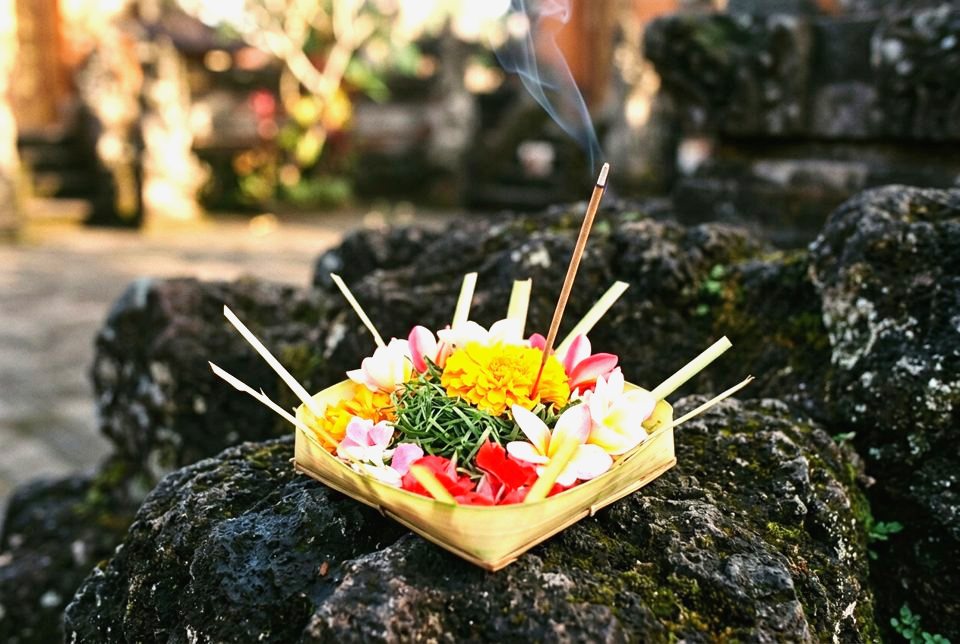
- Permission and gratitude. Daily offerings such as canang sari, made of flowers, water, incense and other elements, express gratitude and respect, and ask permission, much as you would when entering someone's home. They are not a requirement in sessions.
- Direct transmission from a living Grandmaster, with a commitment to keep the teaching pure and free of ego.
- Simplicity and character. There is no elaborate map to master. The emphasis is on the practitioner's humility, consistency, service and respect.
The tradition describes the energy as intelligent, as knowing where to go, and as not limited by distance. These are traditional teachings, and Mathieu SUN presents them as such. Changes can be subtle or noticeable, quiet or visible, and the tradition insists that nothing can be forced, chased or controlled. Experiences vary from person to person.
Who might find acupressure relevant, and who might prefer Jnana Kanda?
No single approach is best for everyone, and the person matters as much as the method. These are general pointers, not rules.
Acupressure may suit you if...
- You enjoy physical, hands-on work and like feeling something concrete.
- You are drawn to the structure of traditional Chinese medicine and its point-based approach.
- You want a skill you can use yourself, through self-acupressure, for everyday tension and relaxation.
- You prefer in-person sessions with a practitioner trained in a clearly defined technique.
Jnana Kanda may be relevant if...
- You would rather not be touched, or find touch difficult.
- You are drawn to a practice that works with body, energy and mind as one field, and that places consent and your own readiness at its centre.
- You want the option of an online session, as described in what happens in an online energy healing session.
- You are interested in the Balinese cultural and spiritual context, including gratitude, purification and humility.
You may also find that these approaches complement each other, since they are not mutually exclusive. If you are weighing several options, what is the best energy-healing modality? helps you think through the choice, and energy healing vs. Reiki and Qigong vs. Jnana Kanda compare other well-known practices. If safety is your main concern, read is Jnana Kanda safe?.
Frequently asked questions
Is acupressure the same as energy healing?
Not exactly. Acupressure is a touch-based technique that, within TCM, is understood as influencing the flow of qi through points on the body. Energy healing is a broader term for practices that work with vital energy, often without a fixed point system. Jnana Kanda belongs to the second group, with its own Balinese framework.
Does Jnana Kanda use acupressure points?
No. Jnana Kanda has no point protocol and no fixed posture. According to the teaching, the practitioner is a vessel for a pure, intelligent energy that knows where to go, so sessions are not organised around pressing specific places on the body.
Can I try both acupressure and Jnana Kanda?
Yes, many people explore more than one approach, and they are not in conflict. It can help to introduce them one at a time so you can notice what each does for you, and to tell your healthcare professionals about the complementary practices you use.
Is acupressure or energy healing a substitute for medical care?
No. Both are complementary practices for wellbeing and personal development. Neither should be used to diagnose or treat a medical condition, and neither replaces qualified healthcare. Jnana Kanda is described by its own tradition as working alongside medical science, not instead of it.
Do I need to believe in energy for Jnana Kanda to work?
The tradition emphasises openness, willingness and conscious consent rather than a particular belief system. You do not need to adopt any worldview, but you do need to be willing to receive. Experiences vary, and nothing is guaranteed or can be forced.
Discover Jnana Kanda with Mathieu SUN
If you are curious about a practice that does not rely on points, pressure or a fixed posture, you can book an online session with Mathieu SUN. Sessions are also available in person in Cap d'Antibes, and you can read more on the online sessions and in-person sessions pages. Jnana Kanda is a complementary practice and does not replace medical care. Please consult a qualified healthcare professional for any medical concern.
Sources and further reading
- Acupressure (Wikipedia) — general description of acupressure, its methods and its relationship to TCM
- Shiatsu (Wikipedia) — background on the Japanese bodywork form
- Traditional Chinese medicine (Wikipedia) — overview of the framework in which acupressure developed
- Qi (Wikipedia) — the concept of vital energy in Chinese thought
- Acupuncture: What You Need To Know (NCCIH) — balanced, research-based information on a closely related point-based practice