What Is the Best Energy-Healing Modality? How to Choose
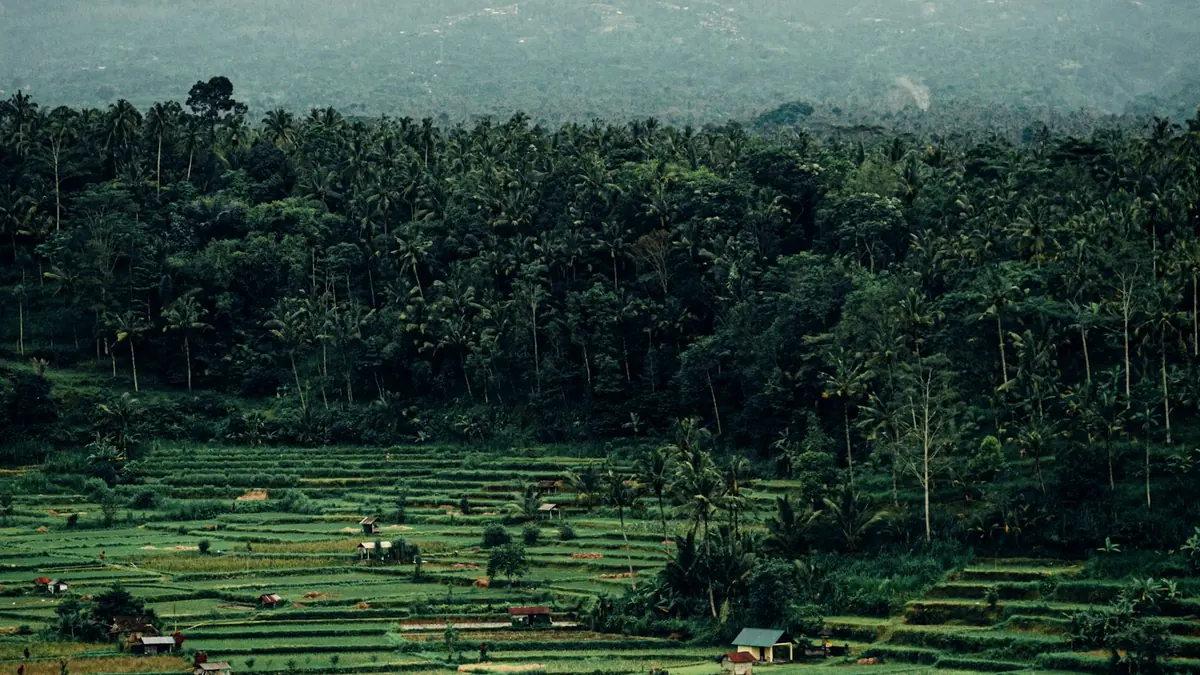
There is no universally best energy-healing modality. The right choice depends on the person, their goals, the kind of approach they are drawn to, and above all the training, ethics and conduct of the practitioner. Energy practices are complementary and do not replace medical care. People who want a traditional, transmission-based Balinese practice may find Jnana Kanda a fitting option.
There is no single best energy-healing modality. What works well for one person may feel unremarkable to another, and the quality of the practitioner often matters as much as the name of the method. The most useful question is not "which modality is best?" but "which approach, taught and practised by whom, suits me and my goals?" This guide gives you practical criteria, flags the warning signs, compares the main approaches, and explains where Jnana Kanda, a traditional Balinese practice, fits.
A note on framing. Energy healing is a complementary practice for wellbeing and personal development. It is not a medical treatment and should never replace qualified healthcare. Where this article describes what a tradition teaches about energy, it is describing that tradition's perspective, not established science.
Why is there no universally best modality?
Energy-healing practices come from very different cultures and logics. Some work with the body’s subtle energy, some use sound, objects, movement or breath, and some rely on a direct transmission from teacher to student. They rest on different views of what energy is and what a session is for. Comparing them as if they were competing products misses this.
Three things shape any experience, whatever the modality:
- The person: temperament, expectations, openness, current life situation and what they are actually looking for (calm, a sense of support, a tradition to learn from, a physical technique, a practice to do alone).
- The practitioner: training, lineage or source of teaching, ethics, humility and the way they treat you.
- The fit: whether the style, language and setting feel right for you. Some people want structure and a clear method. Others prefer silence and simplicity.
Experiences vary from person to person, and nobody can honestly promise a particular outcome. A practitioner who says otherwise is already giving you information about how to choose.
How do you choose an energy healer or practice?
These criteria apply to any modality, including Jnana Kanda:
- Clarity about what it is. A good practitioner can explain in plain words what the practice is, where it comes from, what a session involves and what it does not do.
- Honest origins. Ask who trained them and whose teaching they carry. A named, reachable teacher or school is more reassuring than vague claims of ancient secret knowledge.
- Complementary stance. Look for someone who encourages you to keep seeing your doctor or therapist for medical or mental-health concerns.
- Consent at every step. You should be able to say yes, no or not yet, and be fully informed before anything begins.
- Character. Humility, discipline, consistency and respect are visible in how someone speaks about other traditions, about their clients and about their own limits.
- Reasonable pricing and no lock-in. Transparent fees, no mandatory packages and no pressure to continue.
- Your own sense of fit. After a first conversation, do you feel respected and at ease, or hurried and anxious?
What are the red flags to avoid?
Whatever the tradition, step back if you notice any of the following:
- Promises to cure illness, replace medication, or guaranteed results.
- Advice to stop medical treatment or avoid doctors.
- Pressure to book quickly, buy packages or commit long term.
- Fear-based selling: suggesting you carry curses, dangerous blockages or that something terrible will happen if you do not act.
- Work done on you or someone else without their knowledge or permission.
- Claims that their method is the only true one and that others are fake or impure.
- Invented statistics, miracle stories presented as proof, or claims of scientific validation that cannot be checked.
- A practitioner who presents themselves as the source of the power and demands unquestioning trust.
Questions about safety are worth asking directly. Mathieu SUN addresses them in is Jnana Kanda safe?.
How do the main energy-healing approaches compare?
The table below summarises the approaches covered in this series, each described according to its own tradition. It is a starting point, not a ranking. Each row links to a dedicated comparison further down.
| Approach | Core idea in its own tradition | Typical format | Main contrast with Jnana Kanda |
|---|---|---|---|
| Reiki | Japanese practice of channelling universal life energy | Sessions focused on channelling energy; levels of training with attunements | Different origin and structure; Jnana Kanda is a Balinese practice based on direct transmission (shaktipat) |
| Magnetism (magnétiseur) | French-speaking tradition of working with the body's vital energy to rebalance it | Work with the body’s vital energy, often in a local practice | Different cultural roots and methods; Jnana Kanda is entirely touchless, with no physical contact, working through presence, breath and focused intention |
| Acupuncture / acupressure | Traditional Chinese medicine: qi flows along meridians, influenced at specific points | Fine needles (acupuncture) or finger pressure (acupressure) | Point-based physical stimulation versus a practice not tied to specific points or posture |
| Pranic healing | Modern structured system working with the body's energy field (prana) using scanning and cleansing | Often protocols with set steps | Protocol-based method versus a simple, transmission-based practice |
| Chakra healing | Indian-origin concept of energy centres along the body, balanced through various methods | Visualisation, sound or meditation | Works with a map of centres; Jnana Kanda does not rely on one |
| Sound healing | Vibration from bowls, gongs, voice or tuning forks used for relaxation and balance | Receptive sessions, group or individual | Uses external instruments; Jnana Kanda does not require any |
| Crystal healing | Stones are believed to support energetic balance | Stones placed on or around the body | Object-based versus a practice without tools |
| Qigong | Chinese discipline of movement, breath and meditation to cultivate qi | Regular personal practice, often with a teacher | Self-cultivation system versus transmission-based energy work |
| Massage | Manual manipulation of muscles and soft tissue for physical and relaxation benefits | Hands-on bodywork | Physical bodywork versus an entirely touchless practice |
| Shamanic healing | Diverse traditions working with spirits, nature and altered states | Ceremony, journeying, ritual | Spirit-world methods vary widely; Jnana Kanda is a specific living Balinese lineage |
| Meditation and breathwork | Self-directed practices to settle the mind and regulate breath | Individual practice, classes or apps | Self-practice versus received transmission; the two can complement each other |
Reiki
Reiki is a Japanese practice, developed in the early twentieth century, in which the practitioner channels life energy, often with several training levels. It is widely known and has many styles. The differences between Jnana Kanda and Reiki are set out in detail, and energy healing versus Reiki offers a broader view.
Magnetism and the magnétiseur
Magnetism is a long-standing practice in French-speaking countries, where a magnétiseur works with the body’s subtle energy to support its own balance. The background is explained in what a magnétiseur is, and the contrasts in Jnana Kanda versus magnetism.
Acupuncture and acupressure
Both come from traditional Chinese medicine, which describes qi moving along meridians. Acupuncture uses fine needles and is delivered by trained practitioners, and it has been studied in clinical research with varying findings depending on the condition. Acupressure uses finger pressure on similar points. See acupuncture versus energy healing and acupressure versus energy healing.
Pranic healing
Pranic healing is a modern, systematised method that works with the energy body through defined steps such as scanning and cleansing. It suits people who like a clear protocol. The comparison is in pranic healing versus Jnana Kanda.
Chakra healing
Chakra work draws on Indian traditions describing energy centres in the body. Modern versions vary a great deal in method and in how closely they follow the original sources. Read chakra healing versus Jnana Kanda for a fuller comparison.
Sound healing
Sound healing uses singing bowls, gongs, voice or tuning forks, and many people find it deeply relaxing. Its appeal is sensory and immersive. See sound healing versus Jnana Kanda.
Crystal healing
Crystal healing places stones on or around the body, on the belief that they support energetic balance. Scientific studies have not shown that the stones themselves produce specific effects, though some people enjoy the ritual and the calm it brings. The details are in crystal healing versus Jnana Kanda.
Qigong
Qigong is a Chinese discipline combining gentle movement, breath and attention, usually practised regularly by the person themselves. It is closer to a daily training than a session you receive. Compare it in qigong versus Jnana Kanda.
Massage
Massage is a well-established form of bodywork that works directly on muscles and soft tissue. It addresses the physical layer and offers real relaxation benefits, which is different from energy work. See massage versus energy healing and energy treatment or massage.
Shamanic healing
"Shamanic healing" covers many traditions around the world that work with spirits, nature and altered states, each with its own rules and cultural context. The label alone tells you little, so it is worth asking which tradition a practitioner belongs to. Read shamanic healing versus Jnana Kanda.
Meditation and breathwork
Meditation and breathwork are self-directed practices to settle the mind and regulate the breath. They need regular effort, and some people find them hard at first. They can complement any receiving-based practice, as discussed in meditation and breathwork versus Jnana Kanda and why meditation doesn't work for some people.
What distinguishes Jnana Kanda?
Jnana Kanda is a traditional Balinese energy practice, a living lineage carried today by Grandmaster Mahaguru Mangku Alit Ajna. Mathieu SUN practises and teaches it after receiving direct transmission (shaktipat) from him. If you are new to it, what is Jnana Kanda? is a good starting point. Several features set it apart. They reflect the tradition's own teaching and Mathieu SUN's perspective, and they are not scientific claims.
Jnana Kanda is entirely touchless. Mathieu SUN never touches the person, whether the session takes place in Cap d’Antibes or online. In the understanding of the tradition, this is more than a matter of comfort: the practitioner is a channel, not the source, and without physical contact there is no mixing of personal energy between practitioner and receiver. Nothing of the practitioner’s own fatigue or emotions is passed on, and the practitioner does not take on the person’s heaviness, so the energy stays clean, which the teaching links to the purity of the vessel. It also makes the session simple and comfortable for anyone who prefers not to be touched.
A Balinese foundation rooted in water and nature
Bali is a water-based culture. Melukat, purification in living water, comes before transmission, and daily offerings such as canang sari (flowers, water, incense and other elements) express gratitude and ask permission of nature. These offerings are part of the culture, not a requirement in sessions. The role of water is explored in water purification in Balinese energy healing and in the initiation, melukat and shaktipat article.
Permission, gratitude and humility
The tradition's approach to nature is like entering someone's home: you ask, you do not impose. The same attitude applies to people. The Law of Consent in the teaching says energy is sacred and must never violate another being's freedom. Working on someone without their awareness or permission is considered a disruption of natural law, not healing. Gratitude is seen as arising naturally along the path.
Direct transmission, not a certificate
In this tradition the ability is awakened through shaktipat, a direct transmission through the Grandmaster. The practitioner is understood as a vessel or channel, not the source. The teaching names the source as the Pendopo Agung, described as a higher energetic centre of purity. Energy is received, allowed and transmitted, not created or controlled by the practitioner. This matters when you are choosing: the practitioner is not asking you to believe in their personal power.
Simplicity and preserving the essence
There is no fixed posture, no equipment and no complex protocol. One may sit, stand or lie down, and the body follows the energy. After transmission, the practice is described as the mind directing with clear intention, the heart purifying through sincerity and compassion, and the breath carrying, together a state of being more than a technique. The emphasis is on keeping the teaching pure and without ego.
Working with natural coherence, not forcing
The teaching describes the body, energy and mind as one connected field. It looks at disturbances such as stress, mental noise or emotional burden that interfere with the body's own self-regulation. Healing is understood as something remembered, not given. The guiding image is this: it is not about forcing the sun to shine, it is about allowing the flower to open. The person's openness, readiness and willingness matter, and the intention is the highest good of all, with no predetermined outcome.
The ethics and character of the practitioner
The tradition holds that the purity of the energy depends on the purity of the vessel. In practice that means humility, discipline, consistency, dedication, service without attachment and respect for others. It is not a path of control, ego or dominance. These are qualities you can look for in any practitioner, and you can judge them yourself in a first conversation with Mathieu SUN.
Sessions online as well as in person
The tradition teaches that this energy is not limited by distance, time or physical boundaries, so online sessions are a natural format. This is a traditional teaching, not a scientific claim. Mathieu SUN offers online sessions and sessions in Cap d'Antibes, France. To know what to expect, read what happens in an online energy-healing session and distance energy healing with Jnana Kanda.
Who might find Jnana Kanda relevant, and who might prefer another approach?
Jnana Kanda may appeal to you if you are drawn to a traditional practice with a clear cultural source, if you value consent, humility and gratitude, if you prefer simplicity to protocols and tools, or if you are curious about a transmission from a living teacher. It may also suit people who want to explore a session online without travelling. Some people later choose the two-day in-person training to learn the practice themselves.
Another approach may suit you better if you want a method with a long record of clinical research (for example, acupuncture for certain conditions), if you want direct physical bodywork, if you prefer a daily self-practice like qigong or meditation, or if you like a very structured protocol. Many people combine approaches, and that is a reasonable choice. For medical or mental-health concerns, start with a qualified professional.
Frequently asked questions
Is Jnana Kanda touchless?
Yes. Jnana Kanda is entirely touchless, in person and online. In the tradition’s understanding, the absence of physical contact means there is no exchange or contamination of personal energy between practitioner and receiver: the practitioner acts as a clear channel, not as the source.
Is there scientific proof that energy healing works?
Research on energy-based practices is mixed and often limited, and the existence of a measurable "energy" is not established by science. Many people report feeling relaxed or supported, but this does not prove a particular mechanism. Jnana Kanda does not claim to be scientifically proven. Its teachings about energy are presented as the tradition's perspective.
Can I combine energy healing with medical treatment?
Yes. Jnana Kanda is intended to work alongside medical care, not instead of it. Keep following your doctor's advice, and tell your healthcare provider about any complementary practices you use.
How many sessions will I need?
There is no standard number, and no honest practitioner can promise one. In the teaching, changes may be instant or progressive, subtle or visible, and they cannot be forced or expected. You are free to try one session and decide for yourself whether to continue.
Does an online session work as well as an in-person one?
Jnana Kanda teaches that its energy is not limited by distance, so online sessions are considered as valid as in-person ones within the tradition. This is a traditional belief, not a scientific finding. Choose the format that makes you feel most comfortable.
Do I have to believe in it for it to work?
Belief is not the requirement. The teaching speaks of openness, willingness and conscious consent. You can come with curiosity and questions, and you decide what you make of your own experience.
Discover Jnana Kanda with Mathieu SUN
If a traditional, transmission-based Balinese practice resonates with you, the simplest way to find out is a conversation and a session. You can book an online session with Mathieu SUN and ask any question before you decide. Jnana Kanda is complementary and does not replace medical care or professional advice.
Sources and further reading
- Energy medicine (Wikipedia) — overview of energy-based therapies and the state of scientific evidence.
- Reiki (Wikipedia) — origins and practice of Reiki.
- Qigong (Wikipedia) — background on the Chinese movement, breath and meditation discipline.
- Acupuncture (Wikipedia) — traditional Chinese framework and research context.
- Shaktipat (Wikipedia) — the concept of spiritual transmission in Indian traditions.
- Prana (Wikipedia) — the concept of vital energy in Indian thought.
Related
Water Purification and Energy Healing in Balinese Jnana Kanda
Jnana Kanda vs. Reiki: The Key Differences Explained
Jnana Kanda vs Magnétiseur: Energy Healing Compared
Acupuncture vs. Energy Healing: Acupuncture and Jnana Kanda
Acupressure vs. Energy Healing: Which Approach Fits You?
Pranic Healing vs. Jnana Kanda: Two Energy-Based Practices