Distance Energy Healing: Can Jnana Kanda Be Practised Online?
Yes. Mathieu SUN offers online Jnana Kanda sessions by private video call. In the Jnana Kanda teaching, the sacred energy is described as not limited by distance, time or physical boundaries. This is a traditional perspective, not an established scientific fact, and experiences vary from person to person. Online sessions are a complementary practice for wellbeing and do not replace medical care.
Yes, Jnana Kanda can be practised online. Mathieu SUN offers one-to-one Jnana Kanda sessions by private video call, so you can receive a session from your own home, wherever you live. The reason this is possible comes from the tradition itself: the Jnana Kanda teaching describes its sacred energy as intelligent and not limited by distance, time or physical boundaries. That is a traditional teaching, and it is offered here as such. It is not a scientific claim, there is no scientific confirmation that energy acts across distance, and no one can promise you a particular result. What a session can offer is a calm, consensual space for a complementary practice aimed at wellbeing and personal development, not at treating a medical condition.
This article explains what distance energy healing means in general, how the Jnana Kanda tradition understands it, what an online session actually involves, how to prepare, and why experiences differ so much. It also says honestly who may prefer another approach.
What is distance energy healing?
Distance energy healing, also called remote or absent healing, is an umbrella term for practices in which a practitioner works with a person who is not in the same room. It is not a single tradition. Different lineages explain it in their own ways, and it is important to describe each fairly rather than blend them together.
In Reiki, for example, many Western lineages teach a distance technique at the second level of training, and practitioners using it describe sending Reiki to a person who is elsewhere. Reiki practitioners understand this within their own framework of universal life energy. Other traditions speak of prana (in the yogic and Indian context) or qi (in Chinese thought) as a vital force. These concepts are well documented as cultural and philosophical ideas. They are not measured energies in the scientific sense. If you want to read more about these ideas on their own terms, the sources at the end of this article are a good place to start.
Two points are worth stating clearly. First, distance practices are traditional or experiential offerings, and research on them is limited. Many people report feeling calmer or more at ease after a session, but a feeling of relaxation is not proof of a specific mechanism. Second, distance healing is never a replacement for medical diagnosis or treatment. If you are dealing with a medical concern, a qualified healthcare professional should come first.
How does Jnana Kanda understand working at a distance?
Jnana Kanda is a traditional Balinese energy practice. Mathieu SUN practises and teaches it after being trained by, and receiving direct transmission (shaktipat) from, Grandmaster Mahaguru Mangku Alit Ajna. The tradition is carried today as a living lineage through the Grandmaster.
According to the teaching, the heart of Jnana Kanda is a pure, intelligent, sacred energy that knows where to go and restores harmony without force. The teaching describes this energy as not limited by distance, time or physical boundaries. It is not created or controlled by the practitioner. It is received, allowed and transmitted. The practitioner is described as a vessel or channel, a bridge between the seen and the unseen, and not the source. In the tradition's language, the source is the Pendopo Agung, described as a higher energetic centre of purity.
If you accept that picture, an online session is not a lesser version of a session in a room. The video call is simply a way of meeting, of creating a clear moment of attention and consent between two people. If you do not share that view, that is entirely fine. You can see the online session as a quiet, structured hour for yourself, and treat the traditional explanation as one perspective among others. The tradition itself says that changes can be instant or progressive, subtle or powerful, quiet or visible, and that nothing about them can be forced, chased or controlled.
Body, energy and mind as one field
The teaching sees most human difficulties as connected to three interwoven dimensions: the body (the medical side), energy (the vital force, what other traditions call prana or qi) and the mind (thoughts, emotions, beliefs, perception). They influence each other constantly. Energy is seen as the bridge between body and mind, and imbalance is said to often begin in subtler layers before it shows up in the body. The image used is a vehicle: the body is the vehicle, energy the fuel, the mind the driver.
Jnana Kanda approaches the three as one unified field. It does not replace medical science. It works alongside it. The tradition holds that the body has its own inner intelligence and that stress, emotional burden and energetic disturbance can interfere with it. In this view, a session is about reducing that interference so a person's own natural coherence can function more freely, rather than adding something artificial. You are not seen as defective, and you do not need to become someone else.
What happens in an online Jnana Kanda session?
The format is simple on purpose. You book an online one-to-one session, and the meeting takes place by private video call with Mathieu SUN. The sections below describe the general shape of a session. For a more detailed walk-through of what such a session looks like in practice, see what happens during an online energy healing session.
Before the session: consent and intention
Consent is central in Jnana Kanda. The tradition teaches that energy is sacred and must never violate another being's freedom. Working on someone without their awareness or permission is considered a disruption of natural law, not healing. For this reason, online sessions are for you, with your knowledge and agreement, and are not something arranged for another person who has not asked for it. The teaching speaks of openness, willingness and conscious acceptance as the basis of the work. Without consent, it says, there is no alignment.
You will also be invited to think about your intention. This does not need to be elaborate. It can be as simple as wanting to feel less overloaded, to find some calm, or to be open to whatever is ready to shift. The practitioner's own intention is the highest good of all, without imposing a predetermined outcome.
During the session: any position is fine
In Jnana Kanda there is no fixed posture. You can sit in a chair, sit on the floor, or lie down, whichever is most comfortable. The tradition says the body follows the energy. Posture or movement may occasionally be guided, but only to make the process visible. In stillness, the teaching holds that the energy still moves. So if you are lying quietly and apparently nothing is happening, that does not mean the session is not working. It also does not mean it is. It is simply a session.
The practice is sustained, according to the teaching, by three aligned forces: the mind directs with a clear, still intention free of doubt, the heart purifies through sincerity and compassion, and the breath carries when it is deep, calm and conscious. You do not need to perform any of this perfectly. Slow breathing and a willingness to let things be are enough.
After the session: time to integrate
Many people find it helpful not to jump straight back into a busy schedule. Leave some space afterwards to rest, drink some water, take a short walk or simply sit quietly. Some people feel calm, some feel tired, some feel emotional, and some notice very little at first. All of these are common human responses to a quiet hour, and none of them is a guarantee of anything. If something you feel worries you physically or emotionally, speak to a qualified health professional.
How to prepare for an online session
Preparation is mostly practical. The aim is to make the call feel like a protected moment, not one more item in a crowded day.
- Choose a quiet, private space where you will not be interrupted, and silence notifications on your phone and computer.
- Check your internet connection, camera and sound a few minutes beforehand so there is no technical stress at the start.
- Wear comfortable clothes and have a chair, cushion or bed ready, depending on whether you prefer to sit or lie down.
- Keep a glass of water nearby.
- Avoid scheduling anything demanding straight afterwards, so you have time to integrate.
- Take a few minutes to settle your breathing and clarify why you are coming, without setting rigid expectations.
- Make sure the session is truly your own choice, since consent and willingness are the foundation of the practice.
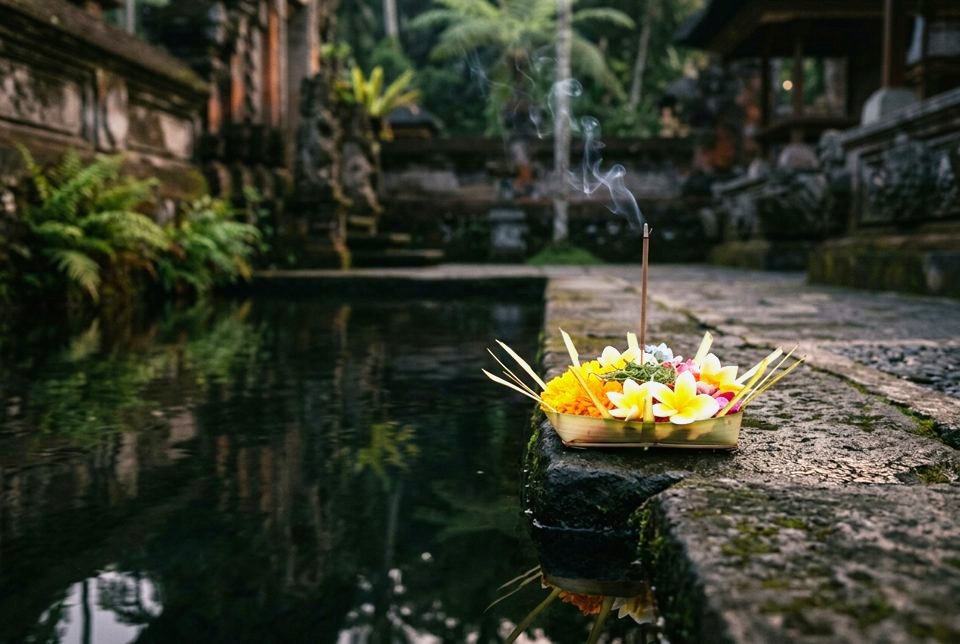
You do not need any prior experience, any belief system or any special objects. Offerings such as the daily canang sari of Bali (small baskets of flowers, water and incense given as gratitude and respect) are part of Balinese culture and of Mathieu SUN's own practice, but they are never required for a session.
What can you realistically expect, and why do experiences vary?
Honest answer: it depends, and there are no guarantees. Jnana Kanda is described by its own teaching as a practice in which nothing is forced, chased or controlled. Any miraculous aspect cannot be expected or demanded. The tradition emphasises that the person's openness, readiness and willingness to receive matter.
Mathieu SUN uses a simple image to describe this, and it is worth understanding in context. The practitioner does not push a result onto someone. The role is to offer a clear, respectful space, and what happens next depends on the person who receives.
“It is not about forcing the sun to shine. It is about allowing the flower to open.”
Several things can explain why two people have very different experiences of the same kind of session. Their state of mind on the day, how tired or stressed they are, their expectations, their comfort with stillness, their openness to the practice, and simply their individual constitution all play a part. In the language of the tradition, some people feel sensations during a session and others feel nothing at the time but notice a shift later, or not at all. A person who feels nothing has not done it wrong.
It is also worth saying plainly that part of what people experience in any calm, attentive, one-to-one setting may come from rest, attention and expectation. Those are real human effects, and they do not make the experience less valuable to the person living it. They do mean that no one should present an energy session as proven or guaranteed.
Distance Reiki and online Jnana Kanda: how do they compare?
Many people arrive at online Jnana Kanda after hearing about distance Reiki, which is one of the best-known forms of remote energy work. Both are legitimate traditions with their own teachings, and neither is automatically better. For the overall question of which modality might suit you, see What is the best energy-healing modality? For a deeper comparison focused on the two lineages, read Jnana Kanda vs Reiki: the differences.
| Aspect | Distance Reiki (as taught in many Western lineages) | Online Jnana Kanda |
|---|---|---|
| Origin and framework | Reiki developed in Japan in the early twentieth century and spread widely in the West, where it is taught in levels. | A traditional Balinese practice carried today as a living lineage by Grandmaster Mahaguru Mangku Alit Ajna. |
| How the ability is acquired | Through attunements or initiations given by a Reiki teacher, depending on the lineage. | Through shaktipat, a direct transmission from the Grandmaster, with melukat (purification in living water) as part of the Balinese context. |
| View of the energy | Often described as universal life energy channelled by the practitioner. | Described as a pure, intelligent sacred energy that is received, allowed and transmitted, with the practitioner as vessel and not the source. |
| Distance work | Typically taught as a distance technique at the second level in many lineages. | The teaching describes the energy as not limited by distance, so an online session by video call is a natural format. |
| Position and form | Often a seated or lying position, with a set of methods that vary by lineage. | No fixed posture. You can sit, stand or lie down, and the body follows the energy. |
| Ethical emphasis | Varies by school and practitioner; many include ethical principles. | The Law of Consent, humility and service without attachment. The purity of the energy depends on the purity of the vessel. |
| Scientific status | Limited research. Effects beyond relaxation and expectation are not established. | A traditional teaching with no scientific confirmation. Not a medical treatment. |
If you are curious about energy work in general and want a broader overview, energy healing vs Reiki is a helpful companion read.
What distinguishes Jnana Kanda?
Several features set the Jnana Kanda path apart, and they help explain why Mathieu SUN offers it the way he does.
Jnana Kanda is entirely touchless. Mathieu SUN never touches the person, whether the session takes place in Cap d’Antibes or online. In the understanding of the tradition, this is more than a matter of comfort: the practitioner is a channel, not the source, and without physical contact there is no mixing of personal energy between practitioner and receiver. Nothing of the practitioner’s own fatigue or emotions is passed on, and the practitioner does not take on the person’s heaviness, so the energy stays clean, which the teaching links to the purity of the vessel. It also makes the session simple and comfortable for anyone who prefers not to be touched.
- Balinese water culture and purification. Bali is a water-based culture, and melukat, purification in living water, comes before transmission. You can read more in water purification and Balinese Jnana Kanda.
- Consent and humility. Asking permission and approaching nature with humility is central, much like entering someone's home: you ask, you do not impose.
- Gratitude and daily offerings. Canang sari offerings express gratitude and respect to nature. They are part of the culture, and they are never prescribed as mandatory in sessions.
- Direct transmission from a living Grandmaster. The practice rests on shaktipat and on preserving the purity of the teaching without ego. See Jnana Kanda, initiation, melukat and shaktipat.
- Simplicity. There is no fixed posture, no complicated ritual to memorise, and no need to believe anything in advance.
- The character of the practitioner. Humility, discipline, consistency, dedication, gratitude, service and respect are seen as essential. The teaching says the purity of the energy depends on the purity of the vessel, and that the path is not about becoming greater than others but about being a channel through which meaningful change can flow.
If you would like a general introduction, start with what is Jnana Kanda or learn about the person behind the sessions on the page about Mathieu SUN, Jnana Kanda teacher. Questions about safety are addressed in is Jnana Kanda safe.
Online session or in person?
Both formats are available for sessions. Online sessions are held by private video call and suit people who live far away, who travel, or who simply feel more at ease at home. Sessions in Cap d'Antibes take place face to face in France. Some people like being in the same room as the practitioner, and others prefer the privacy and comfort of their own space. There is no rule that one is stronger than the other, and the choice is a matter of preference and practicality.
One important difference concerns learning. The Jnana Kanda training itself, the two-full-day transmission, is offered only in person, because it involves direct transmission. You can find details on the 2-day in-person training page. An online session is a session for receiving, not a way to be trained.
Who might find online Jnana Kanda relevant, and who might prefer another approach?
Online Jnana Kanda may be relevant if you are curious about a traditional, gentle energy practice, if you feel overwhelmed or disconnected and would like a quiet space of attention, if you live far from a practitioner, or if you value a practice built on consent, humility and simplicity. It may also appeal if you are already pursuing medical care, healthy habits and other forms of support and you want something complementary alongside them. The tradition itself says the wise path combines medical support, healthy living and deep awareness.
You might prefer another approach if you want something with a firm scientific evidence base, since Jnana Kanda does not claim one. You may also prefer in-person contact or physical touch, as in massage, or a more structured, skills-based practice. If your main goal is to build a daily self-practice, you may find more value in meditation or breathwork, and the article on meditation and breathwork versus Jnana Kanda explores how they differ. If you have a medical or mental health concern, please consult a qualified professional first. No single modality is automatically best for everyone. The person matters as much as the method.
Frequently asked questions
Is Jnana Kanda touchless?
Yes. Jnana Kanda is entirely touchless, in person and online. In the tradition’s understanding, the absence of physical contact means there is no exchange or contamination of personal energy between practitioner and receiver: the practitioner acts as a clear channel, not as the source.
Does online energy healing really work?
There is no scientific confirmation that energy works across distance, so no honest practitioner can promise it. In the Jnana Kanda tradition, the energy is taught to be not limited by distance, and many people describe feeling calmer, lighter or more at ease after a session. Experiences vary, and nothing is guaranteed. Treat it as a complementary practice, not as medical treatment.
Do I need to believe in energy healing for a session to be useful?
No belief is required, but willingness matters. The tradition emphasises openness, readiness and conscious acceptance rather than conviction. You can come with curiosity and healthy scepticism. What the teaching asks is that you are not forcing an outcome and that you are there by your own free choice.
Can I book an online session for someone else?
Not without their knowledge and agreement. The Law of Consent in Jnana Kanda says that working on a person without their awareness or permission is a disruption of natural law, not healing. If you think a friend or relative might benefit, you can tell them about it, and if they are interested, they can book for themselves.
Can I learn Jnana Kanda online?
No. Online sessions are for receiving. The Jnana Kanda training is a two-full-day in-person transmission, because the ability is awakened through shaktipat, a direct transmission from the Grandmaster. If you are interested in learning, see the in-person training page.
Is online Jnana Kanda a substitute for medical care?
No. Jnana Kanda does not replace medical science and works alongside it. The body still follows biological laws, and the tradition itself recommends combining medical support, healthy living and deeper awareness. If you have symptoms or a diagnosed condition, continue to see your doctor or other qualified professional.
What should I do after my session?
Give yourself a little time. Rest, drink water, avoid rushing into demanding tasks, and notice how you feel without judging it. Supportive habits such as sleep, good food, movement, time in nature and quiet are part of the broader balance the tradition describes.
Discover Jnana Kanda with Mathieu SUN
If the idea of a calm, consensual and unhurried session from the comfort of your home appeals to you, you can book an online session with Mathieu SUN. Come as you are, with no need to become someone else. Please remember that Jnana Kanda is a complementary practice for wellbeing and personal development and does not replace medical care, diagnosis or treatment.
Sources and further reading
- Reiki, Wikipedia — background on Reiki's origins, its teaching in levels and the status of research on it.
- Reiki: What You Need To Know, NCCIH — a health-agency overview of Reiki and the state of the evidence.
- Prana, Wikipedia — the concept of vital force in Indian philosophical traditions.
- Qi, Wikipedia — the concept of vital energy in Chinese thought.
- Shaktipat, Wikipedia — an overview of the idea of spiritual transmission in Indian traditions.