Jnana Kanda vs. Reiki: The Key Differences Explained
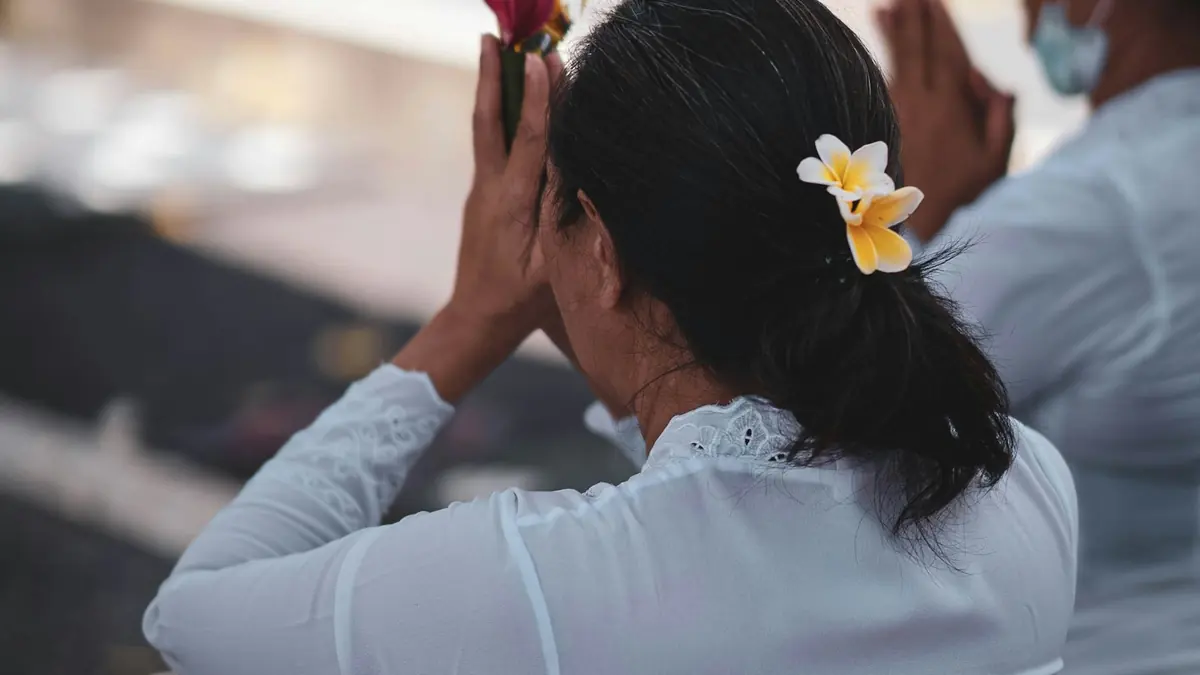
Reiki is a Japanese practice founded by Mikao Usui in the early 20th century. It is usually taught in levels, with attunements, and often practised through hands placed on or near the body. Jnana Kanda is a Balinese energy practice passed on through shaktipat, a direct transmission from a living Grandmaster. The practitioner is seen as a vessel rather than a source, and the practice is guided by purification, consent and gratitude. Both are complementary practices for wellbeing, not medical treatments.
The main difference between Jnana Kanda and Reiki lies in their origin and in how the ability is passed on. Reiki is a Japanese practice, developed by Mikao Usui in the early 20th century. It is typically learned in structured levels, with attunements and a defined set of techniques. Jnana Kanda is a traditional Balinese energy practice. It is received through shaktipat, a direct transmission from a living Grandmaster, and it emphasises the practitioner as a vessel, purification through water (melukat), and a strict Law of Consent. Both are complementary practices. Neither replaces medical care.
This article is written by Mathieu SUN, a practitioner and teacher of Jnana Kanda, so you should know where he stands. He teaches Jnana Kanda and describes it from inside the tradition. He tries to describe Reiki as Reiki's own teachers do, without ranking one above the other. The site also has an older, broader overview of Jnana Kanda and Reiki, and a general piece on energy healing vs. Reiki. This page goes deeper on the specific differences that tend to matter when you are choosing.
What is Reiki, according to its own tradition?
Reiki is a Japanese practice founded by Mikao Usui in the early 1920s. The word is commonly translated as something like "universal life energy" or "spiritual energy". Reiki practitioners describe a gentle practice in which the practitioner acts as a channel for this energy, and the aim is relaxation, balance and a sense of wellbeing. You can read a general background on Reiki and on Mikao Usui in the sources below.
Reiki reached the West largely through Japanese-American teachers in Hawaii, notably Hawayo Takata, in the decades before and after the Second World War. From there it spread widely, and today there are many lineages and styles. Some stay close to Japanese forms of the practice, while others are more Westernised or blended with other ideas. When people say "Reiki", they may therefore mean quite different things in practice, which is worth bearing in mind in any comparison.
Philosophy and ethics in Reiki
Many Reiki lineages teach a short set of ethical principles, often called the Reiki precepts. Their general spirit is to let go of anger and worry, to be grateful, to work with diligence and to be kind to others. This gives Reiki a gentle, everyday ethical framework that many practitioners use as a daily reflection, not only as a technique.
Levels, attunements and the structure of practice
In the common Western structure, Reiki is taught in three stages, often called Level I (first degree), Level II (second degree) and a master or teacher level. Students receive attunements (called reiju in Japanese traditions) from a Reiki master. These are described as opening or aligning the student to Reiki. At the second level, many schools introduce symbols and techniques that are also used for working at a distance. Formats vary: some courses are a weekend, others are spread out, and some are offered online.
In practice, a Reiki session usually involves the recipient lying or sitting fully clothed while the practitioner channels energy. Many Western schools teach a standard sequence of steps, while some Japanese-influenced styles lean on intuition and perception of the body. Sessions are typically quiet and relaxing.
What does science say about Reiki?
This belongs in an honest comparison. Reiki is widely practised as a complementary approach, and many people report feeling calm and relaxed afterwards. Health bodies such as the US National Center for Complementary and Integrative Health (see its Reiki page) say that the evidence on its effects is limited and not conclusive, and that it should not replace conventional care. The same caution applies to Jnana Kanda. Neither practice is proven to treat any medical condition, and the existence of an energy that can be measured has not been established by science.
What is Jnana Kanda?
Jnana Kanda is a traditional Balinese energy practice. It is carried today by a living lineage through Grandmaster Mahaguru Mangku Alit Ajna. Mathieu SUN trained with him and received shaktipat directly from him. For a full introduction, see what Jnana Kanda is and the page about Mathieu SUN as a Jnana Kanda teacher.
The tradition looks at human difficulties through three interconnected dimensions: the body (the medical side), energy (the vital force, which other traditions call prana or qi) and the mind (thoughts, emotions, beliefs, identity). Energy is seen as the bridge between body and mind, and imbalance is said to often begin in these subtler layers before it shows in the body. An image used in the teaching is that the body is the vehicle, energy the fuel and the mind the driver.
In this perspective, the body has its own inner intelligence and natural capacity for self-regulation. Stress, emotional burden and energetic disturbance can interfere with it. The practice is described as removing that interference so the person's own natural intelligence can work again. Healing is understood as something remembered, not given. In the tradition's teaching, the energy itself is pure and intelligent, it "knows where to go", and it is not limited by distance, time or physical boundaries. These are traditional teachings and not scientific claims.
Jnana Kanda vs. Reiki: a side-by-side comparison
The table below summarises the main differences as each tradition describes itself. It generalises, because Reiki exists in many lineages and each practitioner works in their own way.
| Aspect | Reiki | Jnana Kanda |
|---|---|---|
| Origin | Japan, founded by Mikao Usui in the early 1920s | Bali, a living lineage carried today by Grandmaster Mahaguru Mangku Alit Ajna |
| How the ability is passed on | Attunements (reiju) from a Reiki master, usually within a level system | Shaktipat, a direct transmission from the living Grandmaster |
| Role of the practitioner | A channel for universal life energy | A vessel or bridge, not the source; the energy is received, allowed and transmitted, not created or controlled |
| Typical structure | Levels (commonly three), with symbols and set techniques | No fixed posture or technique; a state of being guided by mind, heart and breath |
| Posture and sequence | Often a structured format, frequently following set sequences | No fixed position; one may sit, stand or lie down, and the body follows the energy |
| Preparation and context | Varies by lineage; often a precepts-based ethical framework | Melukat (purification in living water) comes before transmission; daily offerings express gratitude to nature |
| Ethical emphasis | Precepts such as gratitude, kindness and non-anger | Law of Consent; humility, responsibility and service without attachment |
| Distance | Often taught at the second level in many schools | Traditionally taught as not limited by distance, time or physical boundaries |
| Medical stance | Complementary, not a substitute for medical care | Complementary, not a substitute for medical care |
What distinguishes Jnana Kanda?
There are several features that, for Mathieu SUN and in the tradition, give Jnana Kanda its particular character. They are not claims of superiority. They describe what is different.
Jnana Kanda is entirely touchless. Mathieu SUN never touches the person, whether the session takes place in Cap d’Antibes or online. In the understanding of the tradition, this is more than a matter of comfort: the practitioner is a channel, not the source, and without physical contact there is no mixing of personal energy between practitioner and receiver. Nothing of the practitioner’s own fatigue or emotions is passed on, and the practitioner does not take on the person’s heaviness, so the energy stays clean, which the teaching links to the purity of the vessel. It also makes the session simple and comfortable for anyone who prefers not to be touched.
Direct transmission from a living Grandmaster
In Jnana Kanda the ability is awakened through shaktipat, a direct transmission from a higher source through the Grandmaster. The word shaktipat also exists in wider Indian traditions (see the Shaktipat article). In Jnana Kanda, the source of the energy is identified as the Pendopo Agung, described as a higher energetic centre of purity. The practitioner is not the source. In Reiki, too, the practitioner is described as a channel. Where the two differ is in the way the connection is established: a level-by-level attunement system on one side and a direct transmission on the other. For how this works in practice, see Jnana Kanda initiation: melukat and shaktipat.
Balinese water culture and melukat
Bali is a water-based culture, and melukat, a purification in living water, comes before transmission. This links the practice to the land and the culture it comes from. In this tradition, purification is not an optional extra. It is part of preparing to receive.
Asking permission and gratitude
In the Balinese context, you approach nature the way you enter someone's home: you ask, you do not impose. Daily offerings such as canang sari (flowers, water, incense) are an expression of gratitude and respect. They are not a requirement for people who come for a session.
The Law of Consent
In the teaching, energy is sacred and must never violate another being's freedom. Working on someone without their awareness or permission is seen as a disruption of natural law, not healing. It requires openness, willingness and conscious acceptance. Consent matters in good Reiki practice too, but in Jnana Kanda it is stated as a foundational law of the path.
Simplicity and the character of the practitioner
Jnana Kanda is entirely touchless, with no required sequence of positions, and the practice is sustained by three aligned forces. The mind directs with a clear, still intention. The heart purifies through sincerity and compassion. The breath carries, deep, calm and conscious. It is a state of being more than a technique. The tradition also holds that the purity of the energy depends on the purity of the vessel. That is why humility, discipline, respect and service matter as much as skill.
How are the experiences different?
Experiences vary a great deal with both Reiki and Jnana Kanda, and they depend on the person as much as on the practice. People often report deep relaxation, calm or a sense of release in both. In Jnana Kanda, the tradition says changes may be instant or progressive, subtle or powerful, quiet or visible. Nothing is to be forced, chased or expected. Mathieu SUN uses this image: it is not about forcing the sun to shine, it is about allowing the flower to open. The practitioner does not push for a result. The person's openness, readiness and willingness to receive matter, and the intention is the highest good of all, without a predetermined outcome.
If you are curious how a session feels and unfolds, what happens in an online energy healing session walks through it step by step.
Which differences matter when choosing?
- Structure vs. simplicity. If you like clear levels, a curriculum and set techniques, Reiki's structure may suit you. If you prefer an approach with no fixed technique, Jnana Kanda may appeal.
- Cultural roots. Reiki is Japanese in origin and Jnana Kanda is Balinese. Think about which cultural context and symbolism speaks to you.
- Transmission. A graded attunement system and a direct transmission from a living Grandmaster are different paths to the ability. Decide which feels right to you.
- The practitioner. In both, the person in front of you matters. Look at their character, humility, clarity about what the practice can and cannot do, and respect for consent.
- Format. Both are offered in person and remotely. Jnana Kanda sessions with Mathieu SUN are available online or in person in Cap d'Antibes.
No single modality is automatically best for everyone, and results and experiences vary. For a wider view, see What is the best energy-healing modality?. Other comparisons on this site cover pranic healing vs. Jnana Kanda, chakra healing vs. Jnana Kanda and Jnana Kanda vs. magnetism and the magnétiseur.
Who might find Jnana Kanda relevant — and who might prefer another approach
Jnana Kanda may be relevant if you are drawn to a simple, quiet practice rooted in a living tradition. It may also suit you if you value consent, humility and gratitude as foundations, or if you are open to the idea that your own natural coherence can be supported without forcing anything. It may also appeal to someone who wants to learn to practise through direct transmission, in the two-day in-person training.
You might prefer Reiki, or another approach, if you want a graded curriculum with defined levels and techniques. You might also prefer it if you want to learn within a lineage close to you, or if a more structured format feels more comfortable. If you are looking for a measurable or clinically established treatment, neither practice is the right answer. A qualified healthcare professional is. If you are wondering about safety and boundaries, read whether Jnana Kanda is safe.
Frequently asked questions
Is Jnana Kanda touchless?
Yes. Jnana Kanda is entirely touchless, in person and online. In the tradition’s understanding, the absence of physical contact means there is no exchange or contamination of personal energy between practitioner and receiver: the practitioner acts as a clear channel, not as the source.
Is Jnana Kanda a form of Reiki?
No. Jnana Kanda is a Balinese practice transmitted through shaktipat from Grandmaster Mahaguru Mangku Alit Ajna, while Reiki is a Japanese practice founded by Mikao Usui in the early 1920s. They share the idea of working with energy and the practitioner as a channel, but their origins, transmission, training and cultural context are different.
Do you need an attunement for Jnana Kanda?
To practise Jnana Kanda yourself, the ability is awakened through shaktipat, a direct transmission rather than a graded attunement system. To receive a session you need no initiation. You only need to be open and willing, because consent is the foundation of the practice.
Can Jnana Kanda or Reiki replace medical treatment?
No. Both are complementary practices for wellbeing and personal development, not medical treatments, and neither is proven to cure any condition. For any medical concern, consult a qualified healthcare professional. The wise path combines medical support, healthy living and deeper awareness.
Does Jnana Kanda work online?
The tradition teaches that this energy is not limited by distance, time or physical boundaries. Mathieu SUN therefore offers online one-to-one sessions as well as sessions in Cap d'Antibes. This is the tradition's perspective, not an established scientific claim, and experiences vary from person to person.
Which is better, Jnana Kanda or Reiki?
Neither is better for everyone. The right choice depends on your temperament, your cultural affinities, what kind of structure you want and, above all, the practitioner you trust. Try to understand what each offers, ask questions and choose what feels honest and respectful to you.
Discover Jnana Kanda with Mathieu SUN
If you would like to experience Jnana Kanda for yourself, you can book an online session with Mathieu SUN. Come with openness and no expectations to meet. Jnana Kanda is complementary and does not replace medical care.
Sources and further reading
- Reiki — Wikipedia — general background on Reiki's history, practice and the scientific assessment of it
- Mikao Usui — Wikipedia — background on the founder of Reiki
- Hawayo Takata — Wikipedia — how Reiki was brought to Hawaii and the West
- Reiki — NCCIH — a health-agency overview of Reiki and the state of the research
- Shaktipat — Wikipedia — the wider Indian concept of shaktipat, as background to the term