Meditation & Breathwork vs. Jnana Kanda: Which Fits You?
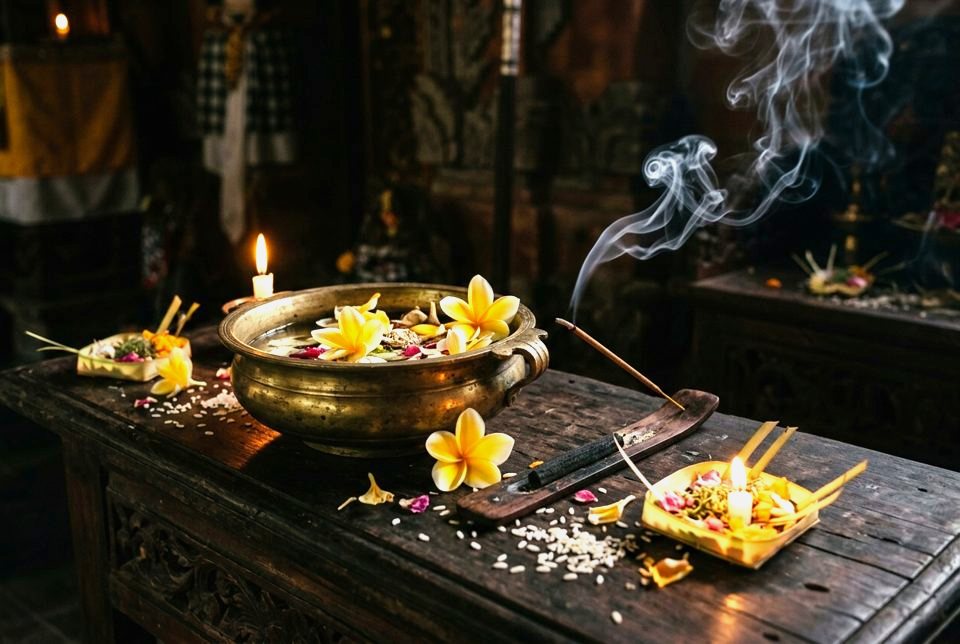
Meditation and breathwork are self-directed practices: you train your attention or regulate your breathing yourself, usually through regular repetition. Jnana Kanda is a Balinese energy practice in which a trained practitioner, who received a direct transmission (shaktipat) from the Grandmaster, acts as a channel for the energy, with the receiver's consent and openness. None is inherently better; the right choice depends on your goals, temperament and circumstances, and they can complement one another.
Meditation and breathwork are practices you do yourself, building skill through regular repetition. Jnana Kanda is a Balinese energy practice in which a trained practitioner works with the tradition's energy, with your consent, while you receive. They answer different needs: one develops your own capacity to regulate attention and breathing, the other offers a different kind of support. Neither is inferior, and many people use both. This article describes each fairly, compares them, and helps you decide what fits your goals.
A note on how this is written. Descriptions of meditation and breathwork follow their own established traditions and what is publicly documented about them. Statements about Jnana Kanda reflect the teaching of Grandmaster Mahaguru Mangku Alit Ajna as I, Mathieu SUN, practise and teach it. They are the tradition's perspective, not established science. Jnana Kanda is a complementary practice for wellbeing and personal development, not a medical treatment.
What is meditation, according to its own traditions?
Meditation is not one technique but a large family of practices that train attention and awareness. They come from contemplative traditions such as Buddhist, Hindu, Taoist, Christian and Sufi lineages, and today also from secular programmes.
- Mindfulness: observing present-moment experience (breath, sensations, thoughts, sounds) with openness and without judgement.
- Concentration practices: resting attention on a single object, such as the breath, a sound, a mantra or a flame, and returning to it when the mind wanders.
- Loving-kindness and compassion practices: deliberately cultivating warmth toward yourself and others.
- Open awareness or inquiry practices: resting as awareness itself, or investigating the nature of the self.
The common thread is that you are the one practising. A teacher, group or app may guide you, but the work happens in your own attention. The skill grows with repetition, much like learning an instrument. Researchers have studied meditation and mindfulness for stress, anxiety, low mood, pain and sleep. Results vary by technique, person and condition, and the evidence is stronger for some uses than others. The US National Center for Complementary and Integrative Health offers a balanced overview.
What is breathwork, and how do pranayama and coherent breathing differ?
Breathwork is an umbrella term for practices that deliberately change how you breathe: pace, depth, rhythm or focus. Three broad families are worth distinguishing.
Pranayama
Pranayama is the yogic discipline of breath regulation, described in classical Indian yoga traditions. Practices include alternate-nostril breathing, extended exhalation and breath retention. In these traditions, the breath is a way to work with prana, the vital force. Traditionally it is learned step by step from a teacher and practised regularly.
Coherent or slow breathing
Coherent breathing usually means slow, even breathing at a gentle, steady pace, often with a longer exhale. People commonly use it to settle the nervous system, and it is easy to learn and practise anywhere. Because it is simple and portable, it is one of the most accessible self-regulation tools.
Intensive or cathartic breathwork
Some modern methods use faster, deeper or circular breathing, often in a group, sometimes with music, to bring about strong physical or emotional experiences. These are more intense, and a trained facilitator matters. People with cardiovascular, respiratory, seizure-related or certain mental-health conditions, and people who are pregnant, should speak with a qualified healthcare professional first.
What is Jnana Kanda, and where does the breath fit?
Jnana Kanda is a living Balinese energy practice carried today by Grandmaster Mahaguru Mangku Alit Ajna. For a broader introduction, see what is Jnana Kanda. In the teaching, most human difficulties relate to three connected dimensions: the body, energy (the vital force, what other traditions call prana or qi) and the mind (thoughts, emotions, beliefs, perception). Energy is understood as the bridge between body and mind, and imbalance often begins in subtler layers before it shows physically. The image given is that the body is the vehicle, energy the fuel and the mind the driver.
Jnana Kanda does not try to add something artificial or force a result. In the tradition's view, stress, emotional burden and energetic disturbance interfere with the body's own intelligence and natural coherence. The practice is about removing that interference so a person's own energy can flow more naturally. The teaching describes a pure, intelligent energy that is not limited by distance, time or physical boundaries. The practitioner does not create or control it. The practitioner receives, allows and transmits it.
The ability to work this way is awakened through shaktipat, a direct transmission from the Grandmaster, and the practitioner becomes a vessel or channel rather than the source. Initiation, melukat and shaktipat explains the context, including the Balinese water purification that precedes transmission.
Breath is central to the practitioner's side of the practice, not only for the person receiving. After shaktipat, the teaching says the practice is sustained by three aligned forces: the mind directs (clear intention, free of doubt), the heart purifies (sincerity and compassion) and the breath carries (deep, calm and conscious). Together they form one field, so it is a state of being more than a technique. This is where Jnana Kanda and breathwork meet: both treat conscious breathing as important. They differ in who is breathing, and why.
Meditation and breathwork vs. Jnana Kanda: a fair comparison
| Aspect | Meditation and breathwork | Jnana Kanda |
|---|---|---|
| Basic approach | Self-directed training of attention, breathing or awareness | A practitioner who received shaktipat acts as a channel for the tradition's energy; the receiver is open and consenting |
| Who does the work? | You, through regular practice | The practitioner transmits; the receiver allows and receives |
| Role of the breath | Often the main tool or object of focus | One of three pillars for the practitioner, alongside mind and heart |
| Learning curve | Gradual skill that deepens with repetition | A session needs no prior skill; learning to practise it involves transmission and training |
| Posture and form | Often specific (seated posture, breathing patterns) | No fixed posture; one may sit, stand or lie down, and the body follows the energy |
| Source of the method | Contemplative, yogic and modern secular traditions | A living Balinese lineage carried by the Grandmaster |
| Time commitment | Usually daily or frequent practice | A session is a single appointment; any ongoing practice is your own choice |
| Cost and access | Often free or low-cost; available anywhere | Involves a practitioner's time; sessions are available online or in person |
| Scientific status | Meditation and some breathing practices have been researched, with mixed and condition-specific findings | Traditional teaching; its energetic claims lack scientific confirmation, and experiences vary |
| Main caution | Intensive breathwork needs care with some health conditions; meditation can sometimes bring up difficult material | Not a replacement for medical care; requires consent |
What distinguishes Jnana Kanda?
Several features set Jnana Kanda apart. None makes it superior to meditation or breathwork; they simply describe what it is.
- Direct transmission. The practice is passed on through shaktipat from a living Grandmaster, not learned from a book or app. The emphasis is on preserving the purity of the teaching without ego.
- Balinese water culture. In Bali, purification in living water (melukat) comes before transmission, and daily canang sari offerings express gratitude and ask permission of nature. In sessions these are never prescribed as mandatory.
- Consent. In the teaching, working on someone without their awareness or permission is not healing but a disruption of natural law. Openness and willingness matter.
- Receiving rather than doing. The person is not asked to master a technique, concentrate or control their breath. That can be a relief if effort itself feels like a burden.
- Character of the practitioner. The teaching holds that the purity of the energy depends on the purity of the vessel, which means humility, discipline, sincerity, service and respect.
- Simplicity. There is no fixed posture or elaborate ritual to follow as a client.
The guiding image is this: it is not about forcing the sun to shine, it is about allowing the flower to open. The practitioner does not impose an outcome. Your openness and readiness to receive matter, and the intention is the highest good of all. The tradition also says changes can be subtle or visible, instant or progressive, and that anything "miraculous" cannot be controlled or expected.
Can meditation and breathwork work alongside Jnana Kanda?
Yes. They address different things and rarely conflict. In the Jnana Kanda view, a calmer mind helps energy rebalance, and the body follows. Practices such as breathing, stillness, time in nature, sleep and awareness of thoughts are part of practical balance in the teaching. Someone with a steady breathing or meditation routine may find it supports how they experience a session. Someone in a session might feel more inclined to start a simple daily practice afterwards.
A realistic combination might be a few minutes of slow breathing each morning, a longer meditation on weekends and an occasional Jnana Kanda session when you want a different kind of support. That is a personal arrangement, not a prescription.
What if meditation has not worked for you?
Many people try meditation and feel they are doing it wrong: the mind will not quiet, sitting is uncomfortable, or the practice brings up restlessness. That is a common experience, not a personal failing, and the reasons vary. I discuss them in why meditation doesn't work for me. Sometimes a different style, a teacher or a gentler method helps. Sometimes a person is better served by a receptive approach for a while. For those who want to try one, Jnana Kanda asks you to be open and willing, not to perform a technique.
Who might find Jnana Kanda relevant — and who might prefer another approach?
Jnana Kanda may be relevant if you
- Prefer receiving to doing, at least for now, or find effortful techniques frustrating.
- Are drawn to a traditional, relational practice grounded in Balinese culture and a living lineage.
- Want a complementary approach alongside medical care and healthy living.
- Are curious about the tradition's view of body, energy and mind as one field.
- Are interested, down the line, in learning to practise it yourself through the two-day in-person training.
Another approach may suit you better if you
- Want a method with a larger body of research behind it, such as structured mindfulness programmes.
- Enjoy building skill through daily, self-directed discipline and want full independence from a practitioner.
- Need support for a diagnosed condition. Please begin with qualified healthcare, which Jnana Kanda does not replace.
- Prefer movement-based or sound-based practices. See Qigong vs. Jnana Kanda and sound healing vs. Jnana Kanda.
No single modality suits everyone, and the person matters as much as the method. For a wider overview, see What is the best energy-healing modality?. If you are weighing whether remote work makes sense for you, distance energy healing and online Jnana Kanda explains how the tradition understands it, and what happens in an online energy healing session walks through the practical side. Safety questions are covered in is Jnana Kanda safe.
Frequently asked questions
Is Jnana Kanda a form of meditation or breathwork?
No. Jnana Kanda is a distinct energy practice in which a practitioner, who received shaktipat from the Grandmaster, acts as a channel. Breath is one of its three pillars alongside mind and heart, but the receiver does not have to meditate or follow a breathing pattern.
Do I need to meditate or do breathwork before a Jnana Kanda session?
No prior practice or experience is required. What matters in the tradition's view is your openness, willingness and consent. You can sit, stand or lie down, and there is no technique to master.
Is breathwork or meditation better than energy healing?
Neither is better in general. Meditation and some breathing practices have been studied, with findings that depend on the technique and the person. Energy practices such as Jnana Kanda are based on traditional teaching without scientific confirmation. People choose according to their goals, temperament and circumstances, and many combine approaches.
Can intensive breathwork be risky?
It can be for some people. Fast or prolonged breathing can cause dizziness, tingling or strong emotional reactions, and it may be unsuitable with certain cardiovascular, respiratory, seizure-related or mental-health conditions, or in pregnancy. Check with a healthcare professional and work with a qualified facilitator.
Can I do Jnana Kanda sessions online?
Yes. In the tradition's teaching the energy is not limited by distance, and I offer sessions online as well as in Cap d'Antibes. This is the tradition's perspective rather than a scientific claim, and experiences vary. You can read more on the online sessions page or the in-person page.
Will Jnana Kanda replace my medical care?
No. Jnana Kanda works alongside medical science, not in place of it. The body still follows biological laws, and the wise path combines medical support, healthy living and deep awareness.
Discover Jnana Kanda with Mathieu SUN
If you are curious how a receptive, transmission-based practice feels compared with the self-directed work of meditation and breathwork, you are welcome to book an online session. You can also learn more about who I am and how I teach. Jnana Kanda is complementary and does not replace medical care. Please consult a qualified healthcare professional for any medical concern.
Sources and further reading
- Meditation and Mindfulness: What You Need To Know (NCCIH) — a balanced overview of research on meditation and mindfulness.
- Meditation (Wikipedia) — background on the range of meditation traditions and techniques.
- Mindfulness (Wikipedia) — origins and modern uses of mindfulness practice.
- Pranayama (Wikipedia) — the yogic tradition of breath regulation.
- Shaktipat (Wikipedia) — general background on the concept of transmission in Indian spiritual traditions.