Pranic Healing vs. Jnana Kanda: Two Energy-Based Practices
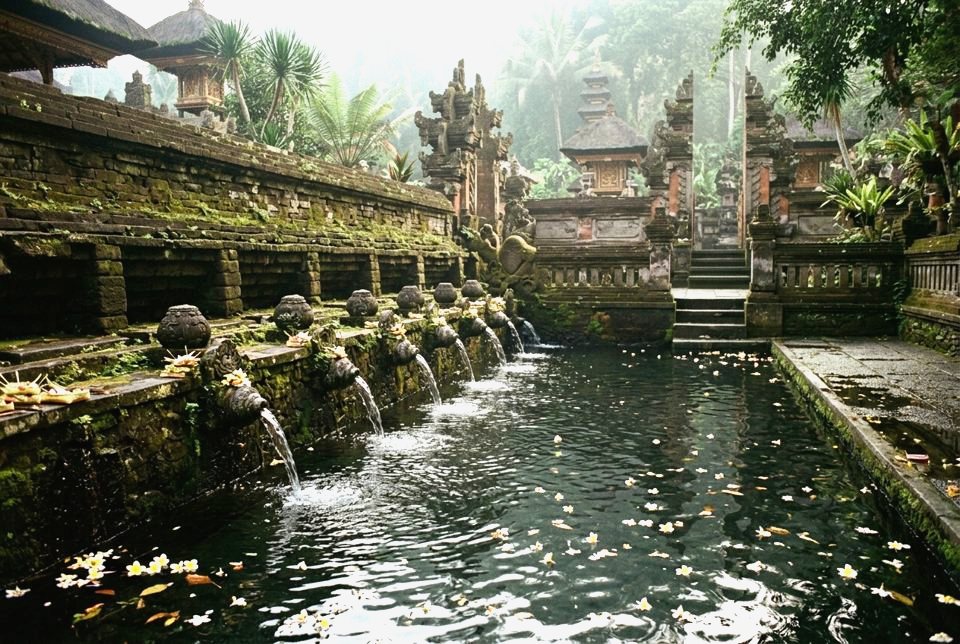
Pranic Healing is a modern, structured system developed by Choa Kok Sui in the 1980s. It teaches practitioners to scan, cleanse and energize a person's energy body, often without touch. Jnana Kanda is a living Balinese energy practice, passed on by direct transmission (shaktipat) from Grandmaster Mahaguru Mangku Alit Ajna. In this tradition the practitioner is a vessel for the energy, not its source. They are different paths with different methods, and neither is objectively more powerful. Which one suits you depends on the person.
Pranic Healing and Jnana Kanda both work with the idea of life energy, but they differ in origin, method and in how they understand the practitioner's role. Pranic Healing is a modern system, popularised from the 1980s by Choa Kok Sui, built around techniques such as scanning, cleansing and energizing the energy body. Jnana Kanda is a living Balinese practice received through direct transmission, where the practitioner is understood as a channel for the energy rather than its source. Neither is objectively more powerful or more correct. This article describes each on its own terms and then compares them, so you can see which feels closer to you.
A note on perspective. Statements about how Pranic Healing works come from its own published teachings. Statements about Jnana Kanda come from the teaching of Grandmaster Mahaguru Mangku Alit Ajna, as passed on by Mathieu SUN. Both describe traditional or practitioner-held beliefs about energy. Scientific research has not confirmed that an energy body or measurable life force exists. Both are complementary practices for wellbeing and personal development, not medical treatments.
What is Pranic Healing?
Pranic Healing is a system of energy healing taught by Grand Master Choa Kok Sui, who presented it in the 1980s under the name Modern Pranic Healing. It draws on the concept of prana, a Sanskrit word for vital life force that appears across Indian philosophy and yoga. If you want some background on the term itself, the Wikipedia article on prana is a good starting point.
Core ideas of Pranic Healing
According to its teachings, the physical body is surrounded and interpenetrated by an energy body, often called the aura or bioplasma. That energy body has energy centres, or chakras, through which prana flows. Pranic Healing holds that physical and emotional problems are connected to depleted or congested energy in this body. It also holds that the physical body can recover faster when the energy body is cleaned and recharged. Prana is said to be drawn from sources such as sunlight, air and the earth.
The typical method
Pranic Healing is known for being systematic and teachable in stages. Its methods are usually described in a sequence:
- Scanning: the practitioner perceives the condition of the person's energy body and chakras.
- Cleansing (sometimes called sweeping): the practitioner removes what the system considers used-up, stagnant or congested energy.
- Energizing: the practitioner projects fresh prana to the area or chakra in need.
- Stabilising: the practitioner helps the new energy settle.
Work can be done in person or at a distance. The organisations teaching it generally present it as complementary to, not a substitute for, conventional medical care.
What science says
The existence of an energy body, chakras or prana has not been established by scientific research. For people who find it helpful, the benefits they describe, such as relaxation, a sense of care or a calmer state of mind, are personal experiences. They should not be read as proof of the underlying model. The same caution applies to Jnana Kanda.
What is Jnana Kanda?
Jnana Kanda is a traditional Balinese energy practice. Mathieu SUN, who practises and teaches it, was trained by Grandmaster Mahaguru Mangku Alit Ajna and received direct transmission from him. It is best described as a living lineage carried today by the Grandmaster, not a fixed system that can be learned from a manual. For a full introduction, see what is Jnana Kanda.
The teaching looks at human difficulties through three interconnected dimensions: the body, energy and the mind. Energy is the bridge between the other two. Imbalance often begins in subtler layers before it becomes visible in the body, and the three constantly influence one another. A useful image is that the body is the vehicle, energy the fuel and the mind the driver. Jnana Kanda treats them as one field and works at the root rather than the surface. It works alongside medical science and does not replace it.
In the tradition's perspective, the body has its own inner intelligence and capacity for self-regulation. Stress, emotional burden and energetic disturbance interfere with it. The practice is described as removing that interference so natural intelligence can function. Healing is understood as something remembered, not given.
At the heart of the teaching is a pure, intelligent, sacred energy. The tradition describes it as one that knows where to go, is not limited by distance, time or physical boundaries, and restores harmony without force. It is not created or controlled by the practitioner. It is received, allowed and transmitted. This is a traditional teaching, not a scientific claim.
Pranic Healing vs. Jnana Kanda: how do they compare?
The table summarises the main differences as each tradition describes itself. It is a simplification. Individual teachers and practitioners of both paths bring their own character and emphasis.
| Aspect | Pranic Healing | Jnana Kanda |
|---|---|---|
| Origin | Modern system presented by Choa Kok Sui in the 1980s, drawing on yogic and Chinese energy concepts | Balinese practice, a living lineage carried today by Grandmaster Mahaguru Mangku Alit Ajna |
| Core concept | Prana (life energy) moving through an energy body and chakras | A pure, intelligent, sacred energy; body, energy and mind as one unified field |
| Role of the practitioner | Applies defined techniques: scanning, cleansing, energizing | A vessel or channel; the energy is received, allowed and transmitted, not created or controlled |
| How the ability is acquired | Structured courses taught in levels, with techniques to learn and practise | Shaktipat: direct transmission from the Grandmaster, then a practice sustained by mind, heart and breath |
| Typical approach | Systematic, step-by-step protocols | No fixed posture or protocol; the body follows the energy, and stillness is enough |
| Purification and context | Cleansing of the person's energy body is part of the method | Balinese water culture: melukat (purification in living water) precedes transmission; daily canang sari offerings express gratitude |
| Consent | Per the teachings of individual schools and teachers | A central principle, the Law of Consent: working on someone without their awareness or permission is a disruption of natural law |
| Relation to medicine | Presented as complementary | Complementary; it works alongside medical care and does not replace it |
Technique versus transmission
The deepest difference is in how each path understands the practitioner's contribution. Pranic Healing is built around skills: learn to sense, to clear, to energize, to stabilise, with a repeatable sequence that can be taught and refined. Many people appreciate this clarity. Jnana Kanda, in the Grandmaster's teaching, begins from the opposite point. After shaktipat, the practitioner is not the source of the energy and does not direct it technically. The teaching describes three aligned forces: the mind directs through a clear, still intention free of doubt, the heart purifies through sincerity and compassion, and the breath carries. It is described as a state of being more than a technique.
Different views of what is being addressed
Pranic Healing frames its work largely in terms of the energy body: what is depleted, congested or imbalanced. Jnana Kanda speaks of interference with a person's natural coherence, such as fear, mental noise and emotional resistance. The aim is to let the person's own energy flow more naturally, not to add something artificial or fix someone who is defective. These are different vocabularies, and you may find one resonates more than the other.
What distinguishes Jnana Kanda?
For anyone comparing energy practices, several foundations of Jnana Kanda stand out. They come from the tradition itself and from how Mathieu SUN presents it. They are not a claim of superiority.
Jnana Kanda is entirely touchless. Mathieu SUN never touches the person, whether the session takes place in Cap d’Antibes or online. In the understanding of the tradition, this is more than a matter of comfort: the practitioner is a channel, not the source, and without physical contact there is no mixing of personal energy between practitioner and receiver. Nothing of the practitioner’s own fatigue or emotions is passed on, and the practitioner does not take on the person’s heaviness, so the energy stays clean, which the teaching links to the purity of the vessel. It also makes the session simple and comfortable for anyone who prefers not to be touched.
Balinese water culture and melukat
Bali is a water-based culture. Melukat, purification in living water, comes before transmission. Water is not a symbolic add-on. It is the setting in which the person prepares to receive. You can read more about this in the article on initiation, melukat and shaktipat.
Permission and humility
The Law of Consent is central. In the teaching, energy is sacred and must never violate another being's freedom. Working on someone without their awareness or permission is described as a disruption of natural law, not healing. The same attitude extends to nature: you ask permission before entering someone's home, and you do not impose. Without consent, the teaching says, there is no alignment.
Gratitude and daily offerings
In Balinese practice, daily canang sari offerings (small offerings of flowers, water, incense and similar items) express gratitude and respect toward nature. They are part of the cultural and spiritual context Mathieu SUN draws on. They are not a requirement for a session, and no one is asked to adopt them.
Direct transmission and the character of the practitioner
The ability is awakened through shaktipat, direct transmission from a living Grandmaster, so the teaching stays in a person-to-person relationship and not on a page. The tradition also puts great weight on character: humility, discipline, sincerity, service without attachment and no harmful intention. The principle is that the purity of the energy depends on the purity of the vessel. It is not about becoming greater than others but about becoming a channel through which meaningful change can flow. To learn more about the teacher, see Mathieu SUN, Jnana Kanda teacher.
A guiding image
Mathieu SUN often summarises the approach this way: “It is not about forcing the sun to shine. It is about allowing the flower to open.” The practitioner does not force a result. What matters is the person's openness, readiness and willingness to receive, held within the intention of the highest good of all, with no predetermined outcome imposed.
Is Pranic Healing or Jnana Kanda more powerful?
No, and no honest comparison can claim otherwise. There is no scientific basis for ranking energy practices by power. Each rests on beliefs and experiences that science has not confirmed, and individual experiences vary widely within both. What differs is style, structure and philosophy. A person who values clear steps, a defined curriculum and a framework they can study may feel at home in Pranic Healing. A person drawn to a more receptive, ritual-rooted and relationship-based path may feel closer to Jnana Kanda.
The person matters as much as the modality. For a broader view across practices, see What is the best energy-healing modality? If you are also comparing other approaches, you may find these useful: Jnana Kanda vs. Reiki: the differences, chakra healing vs. Jnana Kanda and crystal healing vs. Jnana Kanda.
Who might find Jnana Kanda relevant — and who might prefer Pranic Healing or another approach
Jnana Kanda may be relevant if you
- are drawn to a living tradition with direct transmission and cultural roots in Bali.
- prefer receptivity and stillness over a defined protocol.
- value consent, humility and ethical character in a practitioner.
- want a practice that works alongside medical care and healthy living (sleep, nutrition, movement, breathing, time in nature).
- are comfortable with traditional beliefs presented as such, not as scientific fact.
Pranic Healing may suit you better if you
- want a structured curriculum with defined techniques learned in stages.
- like to understand and apply a step-by-step method such as scanning, cleansing and energizing.
- feel more at ease with a framework based on the aura, chakras and prana as taught in yogic and related traditions.
- prefer a modern, organised school with established courses.
If you have a medical concern, speak to a qualified healthcare professional first. Neither path is a diagnosis or a treatment, and either can be used alongside care. For a closer look at safety questions, read is Jnana Kanda safe?
Frequently asked questions
Is Jnana Kanda touchless?
Yes. Jnana Kanda is entirely touchless, in person and online. In the tradition’s understanding, the absence of physical contact means there is no exchange or contamination of personal energy between practitioner and receiver: the practitioner acts as a clear channel, not as the source.
Is Jnana Kanda the same as Pranic Healing?
No. They share an interest in life energy but are distinct. Pranic Healing is a modern system with defined techniques taught in courses. Jnana Kanda is a Balinese practice received through shaktipat from a living Grandmaster, where the practitioner is a channel and not the source.
How do both practices work?
Pranic Healing works with the body’s subtle energy through structured protocols. In Jnana Kanda there is no fixed posture and the body follows the energy. Posture or movement may be guided only to make the process visible, and the tradition holds that energy is not limited by distance, which is why online sessions are possible. This is a traditional teaching, not a scientific claim.
Can I try Jnana Kanda online?
Yes. Mathieu SUN offers one-to-one online sessions, and in-person sessions in Cap d'Antibes, France. You can read what to expect in what happens in an online energy healing session or see the online sessions overview and the in-person sessions.
Can I learn Jnana Kanda the way I would learn Pranic Healing?
Not in the same way. In Jnana Kanda the ability is awakened through shaktipat, a direct transmission, and not acquired by studying techniques. Mathieu SUN's training is a two full-day in-person transmission, which you can explore at the 2-day Jnana Kanda training page.
Does either practice replace medical treatment?
No. Both are presented as complementary. The Grandmaster's teaching is clear that Jnana Kanda is not a replacement for medical care, that the physical body still follows biological laws, and that the wise path combines medical support, healthy living and deep awareness. Any apparent miracle cannot be controlled, forced or expected.
Can I use both Pranic Healing and Jnana Kanda?
Nothing prevents you from exploring more than one practice, and many people do. It helps to approach each on its own terms and to notice honestly how you respond. Taking your time and choosing teachers whose ethics and approach feel trustworthy matters more than the label.
Discover Jnana Kanda with Mathieu SUN
If Jnana Kanda feels like a path worth exploring, the simplest way is to experience a session and see how it feels for you, with no pressure and no predetermined outcome. You can book an online session with Mathieu SUN. Jnana Kanda is a complementary practice for wellbeing and personal development. It does not replace medical care, and it is not a diagnosis or a treatment for any condition.
Sources and further reading
- Prana — Wikipedia — the concept of prana in Indian philosophy.
- Chakra — Wikipedia — the origin and meaning of chakras in Indian traditions.
- Balinese Hinduism — Wikipedia — the religious and cultural context of Bali, including the role of water and offerings.
- Energy medicine — Wikipedia — a general overview of energy-based practices and the lack of scientific confirmation for their underlying claims.