Chakra Healing vs. Jnana Kanda: Two Approaches to Energy
Chakra healing works through a specific map of energy centres, the chakras, drawn from Indian tantric and yogic traditions and, in its best-known modern form, from a seven-chakra Western system. Jnana Kanda is a traditional Balinese energy practice that is not organised around a chakra map. It focuses on the relationship between body, energy and mind, on natural coherence, and on a pure energy that practitioners describe as received through Shaktipat rather than directed by technique. Both are complementary practices, not medical treatments.
Chakra healing and Jnana Kanda both belong to the wide world of energy-based wellbeing practices, but they start from different places. Chakra healing uses a specific map: a set of energy centres along the body, each with its own qualities, which a practitioner or the person themselves tries to balance. Jnana Kanda, as taught by Grandmaster Mahaguru Mangku Alit Ajna and practised by Mathieu SUN, is not built around that map. It looks at the body, energy and mind as one field and emphasises natural coherence, consent and purification. Neither is a medical treatment, and neither is automatically better for everyone.
This article describes chakras fairly, according to the traditions that gave rise to them, explains how modern chakra balancing varies, and then sets out how Jnana Kanda differs. It also separates what is established, what is traditional belief, what is Mathieu SUN's own perspective, and what remains without scientific confirmation. If you want the wider picture first, see What is the best energy-healing modality?.
What is chakra healing?
Chakra healing is an umbrella term for practices that aim to bring balance to the chakras, which are understood as energy centres in a subtle body. The word chakra comes from Sanskrit and means wheel or circle. The practices range from yoga and meditation to energy work, sound, colour and crystals. What they share is the chakra system as the organising idea.
Where do chakras come from? The Indian tantric and yogic view
Established history: the chakra concept developed within Indian traditions, particularly Hindu and Buddhist tantra and later hatha yoga texts. In these sources, the human being is described as having a subtle body made of channels (nadis), vital energy (prana) and centres (chakras) where channels converge. Practice in these traditions is typically aimed at spiritual development, not at wellness or symptom relief. Techniques include visualisation, mantra, breath work and meditation, usually within a teacher-student relationship and a wider ethical and philosophical framework.
It is worth knowing that these traditions do not agree on a single system. Different texts describe different numbers of chakras, different locations, and different symbolism. A well-known tantric text translated into English in the early twentieth century describes six main centres plus a seventh at the crown. Buddhist tantric traditions use their own systems, with fewer centres in some lineages. So when someone says “the chakras”, the honest question is: according to which tradition?
How does the modern Western seven-chakra system differ?
The seven-chakra model most people meet today is largely a modern Western synthesis. Its roots include early twentieth-century translations of Indian tantric texts, Theosophical writings that reinterpreted them, and later New Age and wellness culture. Popular versions typically assign each chakra a rainbow colour, an element, an emotional theme (such as safety, creativity, personal power, love, expression, intuition, connection) and sometimes a gland or organ area.
Many of these associations, especially the colour sequence and psychological readings, are features of the modern presentation rather than of the older Indian sources. That is not an accusation of inauthenticity. Traditions evolve, and many people find the model a meaningful way to reflect on their inner life. But it is useful to know that the Western seven-chakra chart and the classical tantric systems are related, not identical.
How does chakra balancing vary between practitioners?
There is no single standard for chakra balancing. Depending on who you consult, a session might involve:
- Guided meditation or visualisation of each centre, often with colour
- Mantra or sound, including chanting, singing bowls or tuning forks
- Yoga postures and breathing exercises associated with specific chakras
- Energy work moving from one centre to the next
- Crystals placed on the body, linked to each chakra's colour
- Intuitive or pendulum-based “readings” to assess which chakras seem under- or over-active
Because there is no unified training or governing standard, the quality, tone and claims of chakra work vary widely. Some practitioners are careful and modest. Others make strong promises. Asking how someone works, what they claim, and how they handle medical questions will tell you a lot.
What is established, what is traditional belief, and what is unconfirmed?
- Established: chakras are an important concept in Indian tantric and yogic traditions, and the Western seven-chakra model is a modern development with older roots.
- Established: chakras are not recognised anatomical structures in biomedicine, and research specifically testing chakra balancing is limited. Claims that it treats disease or measurably changes physiology are not scientifically confirmed.
- Traditional belief: the subtle body, with its nadis and chakras, is a framework in which practitioners of these traditions understand inner experience and spiritual development.
- Personal experience: many people report feeling calmer, more reflective or more grounded after chakra-based practices. Such experiences are real to those who have them, but they do not by themselves prove the underlying model, and they can also be influenced by relaxation, attention and expectation.
The same caution applies to Jnana Kanda. What follows about it describes the tradition's own teaching and Mathieu SUN's perspective, not scientific findings.
What distinguishes Jnana Kanda from chakra healing?
Jnana Kanda is a traditional Balinese energy practice, carried today as a living lineage by Grandmaster Mahaguru Mangku Alit Ajna. Mathieu SUN trained with him and received direct transmission (Shaktipat) from him. If you are new to it, What is Jnana Kanda? gives the full introduction. Here are the differences that matter most in comparison with chakra healing.
1. No energetic map to work through
Chakra healing is map-based: you identify a centre, assess it, and work to balance it. Jnana Kanda, as Mathieu SUN teaches it, is not structured this way. The tradition's teaching describes a pure, intelligent energy that is understood to “know where to go”. In other words, the practitioner is not diagnosing and adjusting specific centres. This is a traditional teaching, not a scientific claim.
2. Natural coherence rather than correction
The tradition sees three interconnected dimensions: the body, energy and the mind. Energy is the bridge between the other two, so disturbance can start in subtler layers before it shows up in the body, and a calmer mind can help the energy and then the body settle. Jnana Kanda does not try to add something artificial or force a result. It addresses what interferes with a person's natural coherence, such as fear, mental noise and emotional resistance, so that their own energy can flow more naturally. A person is not seen as defective, and does not need to become somebody else.
“It is not about forcing the sun to shine. It is about allowing the flower to open.”
That image captures the stance. The practitioner does not impose a predetermined outcome. The person's openness, readiness and willingness to receive matter, and the intention is the highest good of all.
3. A transmitted practice, with the practitioner as vessel
In the Jnana Kanda teaching, the practitioner's ability is awakened through Shaktipat, a direct transmission from the Grandmaster. The practitioner is understood as a vessel or channel, not the source, and the energy is received, allowed and transmitted rather than created or controlled. This is quite different from a technique-based model, where outcomes depend mainly on correctly applying a method to a system of centres. For more, see Jnana Kanda initiation: melukat and Shaktipat.
4. Balinese water culture and purification
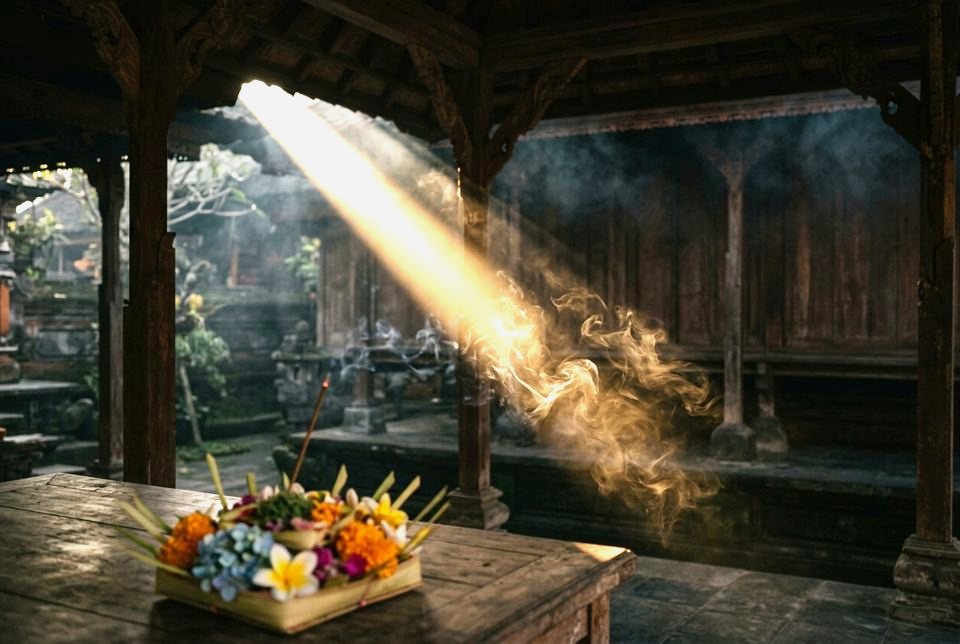
Bali is a water-based culture, and melukat, purification in living water, comes before transmission. Daily canang sari offerings express gratitude and ask permission of nature, much as you would ask before entering someone's home rather than imposing yourself. These elements shape the character of the practice: humility, gratitude and respect. They are part of the culture and teaching, and are not required steps in a session.
5. Consent and ethics at the centre
The tradition teaches a Law of Consent: energy is sacred and must never violate another being's freedom, so working on someone without their awareness or permission is not healing. It also teaches that the purity of the energy depends on the purity of the vessel, which is why humility, discipline and service are treated as part of the practice. To explore this further, read Is Jnana Kanda safe?.
6. Simplicity of form
There is no fixed posture in Jnana Kanda. A person may sit, stand or lie down, and the body follows the energy. Where movement or posture appears, it may be guided only to make the process visible. Because there is no system to learn, there is little to memorise or perform. The tradition describes it as a state of being, with mind, heart and breath aligned, more than a technique.
Chakra healing vs. Jnana Kanda: side-by-side comparison
| Aspect | Chakra healing | Jnana Kanda |
|---|---|---|
| Origin | Indian tantric and yogic traditions; the popular seven-chakra model is a modern Western development | Living Balinese lineage carried today by Grandmaster Mahaguru Mangku Alit Ajna |
| Central idea | A subtle body with energy centres that can be balanced | The relationship between body, energy and mind; natural coherence |
| Organising framework | A chakra map, with the number and qualities varying by tradition | Not organised around a chakra map; guided by the tradition's teaching of a pure, intelligent energy |
| Typical methods | Meditation, visualisation, mantra, sound, yoga, crystals | Energy received and transmitted by a practitioner trained and transmitted through Shaktipat; no fixed posture |
| Role of the practitioner | Often assesses and balances specific centres, depending on the school | Vessel or channel; does not create or control the energy |
| Cultural elements | Sanskrit terminology, colours, elements, mantras | Balinese water culture, melukat, gratitude and offerings (not mandatory in sessions) |
| Standardisation | Varies widely between practitioners; no single standard | Transmitted directly from the Grandmaster; its teaching is kept simple |
| Scientific status | Chakras are not recognised anatomical structures; research on chakra balancing is limited | Traditional teaching; not scientifically proven |
| Relation to medicine | Complementary; should not replace medical care | Complementary; works alongside medical care, does not replace it |
Is one more effective than the other?
There is no honest way to rank them. Experiences differ from person to person, and the person matters as much as the modality. Someone who loves structure, symbolism and a clear vocabulary for inner states may find the chakra framework helpful and engaging. Someone who prefers not to work through a conceptual system, or who wants a simpler, more receptive experience, may be drawn to Jnana Kanda. Neither choice is wrong. For a broader look at how to choose, see What is the best energy-healing modality?.
If you are weighing other approaches too, the site compares several of them directly: Pranic healing vs. Jnana Kanda, crystal healing vs. Jnana Kanda and meditation and breathwork vs. Jnana Kanda. The older overview Jnana Kanda vs. Reiki and the more general energy healing vs. Reiki may also help.
Who might find Jnana Kanda relevant — and who might prefer chakra work or another approach
Jnana Kanda may be relevant if you
- Prefer a simple, receptive experience over a conceptual system to learn
- Are drawn to a living, direct-transmission tradition with a clear ethical framework
- Value consent, humility and gratitude as the foundation of any energy practice
- Want a complementary practice for wellbeing and personal development, alongside medical care where needed
- Are open, and willing to receive, without expecting a specific outcome
You might prefer chakra-based work or another approach if you
- Enjoy a structured framework with symbolism, colours and a vocabulary for inner states
- Want to study yoga, tantra or meditation as a long-term personal discipline, with chakras as part of that study
- Prefer an active, participatory practice you can do on your own each day
- Are looking for a specific modality you already trust, with a practitioner you feel comfortable with
Many people explore more than one approach over time. If you are unsure, a short conversation or a first online session can help you sense whether the style feels right. Nothing needs to be forced.
What happens in a Jnana Kanda session?
Mathieu SUN offers individual sessions in Cap d'Antibes and online. In a session there is no chakra chart, no diagnosis and no requirement to believe anything in advance. What matters is your openness and consent. For a step-by-step description of the online format, see What happens in an online energy healing session?. Some people feel something quiet and subtle, others something more noticeable, and some very little. The tradition teaches that changes can be instant or gradual, and that nothing can be forced or promised.
Frequently asked questions
Does Jnana Kanda work with the chakras?
Jnana Kanda, as Mathieu SUN teaches and offers it, is not organised around a chakra map, and sessions are not structured as a process of balancing specific centres. The tradition's teaching focuses on the relationship between body, energy and mind and on a pure, intelligent energy that is received and transmitted. This does not mean chakras are “wrong”: it simply means the two approaches use different frameworks.
Are chakras scientifically proven?
No. Chakras are a concept from Indian spiritual traditions and are not recognised anatomical structures in biomedicine. Research specifically on chakra balancing is limited, and claims that it treats disease are not scientifically confirmed. Many people nonetheless find chakra-based practices such as meditation and yoga meaningful and relaxing.
Is the seven-chakra system the original Indian one?
Not exactly. Indian tantric and yogic texts describe a variety of chakra systems, with different numbers, locations and symbolism. The popular seven-chakra model with a rainbow of colours and psychological themes is largely a modern Western synthesis built on older sources. The two are related but not identical.
Can I combine chakra work and Jnana Kanda?
Nothing prevents you from exploring both, and many people try several practices over time. They are different in framework and spirit, so it can help to experience each on its own terms and notice what feels right for you. If you have questions about how a session works or whether it suits you, you can ask Mathieu SUN before booking.
Can either of these replace medical care?
No. Both chakra healing and Jnana Kanda are complementary practices for wellbeing and personal development. Neither diagnoses or treats medical conditions, and neither should replace the advice of a qualified healthcare professional. If you have a medical concern, please consult a doctor, and consider any energy practice as an addition rather than a substitute.
Discover Jnana Kanda with Mathieu SUN
If the idea of a simple, receptive, ethically grounded practice resonates with you, you can book an online session with Mathieu SUN and experience it for yourself, with no map to learn and no outcome to chase. You can also read more about Mathieu SUN and his path as a Jnana Kanda teacher. Jnana Kanda is a complementary practice and does not replace medical care.
Sources and further reading
- Chakra — Wikipedia — overview of the concept in Indian traditions and its varying systems, including the modern Western development
- Chakra — Encyclopaedia Britannica — a concise definition of chakras in Hindu and Buddhist traditions
- Kundalini — Wikipedia — background on the tantric and yogic concept associated with chakras
- Nadi (yoga) — Wikipedia — the subtle channels described in yogic and tantric texts
- Yoga: What You Need To Know — NCCIH — an evidence-based overview of yoga for health, from the U.S. National Center for Complementary and Integrative Health