Sound Healing vs. Jnana Kanda: Comparing Two Holistic Practices
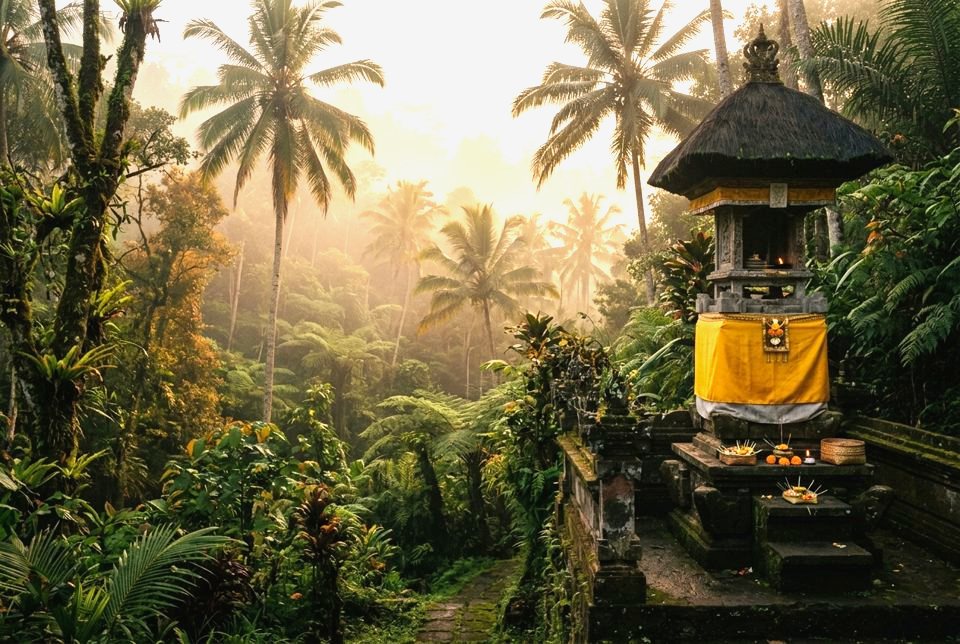
Sound healing uses audible vibration, such as singing bowls, gongs, voice and music, to create a deeply relaxing experience, and the sound itself is the medium. Jnana Kanda is a Balinese energy practice in which, according to the tradition, a practitioner acts as a channel for a pure, intelligent energy received through Shaktipat; the work does not rely on instruments. Both are complementary practices for wellbeing, not medical treatments, and the better fit depends on the person.
Sound healing and Jnana Kanda are two different ways of looking after wellbeing. Sound healing works through audible vibration: singing bowls, gongs, voice and music that you hear and feel in the body. Jnana Kanda is a Balinese energy practice in which, according to its tradition, a practitioner serves as a channel for a pure, intelligent energy received through a direct transmission called Shaktipat. The first is carried by an instrument and a room full of sound. The second, in the tradition's own terms, does not depend on any instrument at all. Neither is a medical treatment, and neither is automatically better for everyone.
This article compares them fairly. It explains how sound is used, what is and is not established about it, how Jnana Kanda understands its own work, and how to think about which might suit you. If you are exploring the wider landscape, you may also like What is the best energy-healing modality?, which looks at how to choose between approaches.
What is sound healing?
“Sound healing” is an umbrella term, not a single standardised discipline. It generally covers practices where sound and vibration are used deliberately to support relaxation, focus or emotional release. The most common formats today are:
- Sound baths: you lie down, usually fully clothed, while a facilitator plays a combination of singing bowls, gongs, chimes, tuning forks or other instruments.
- Singing bowls: metal bowls (often called Tibetan or Himalayan) or quartz crystal bowls that produce sustained tones when struck or rubbed on the rim.
- Gong sessions: large gongs played to build layered, enveloping waves of sound.
- Voice work: humming, toning, chanting or group singing, where the participant produces the sound themselves.
- Music-based approaches: curated playlists, live music or guided listening, sometimes combined with breathing or meditation.
The instruments have varied cultural histories, and today they are often used well outside the traditions that first produced them. A facilitator may draw on yoga, meditation, music or wellness training, and the style differs a lot from one person to the next. Some sessions are gentle and spacious; others are loud and immersive. Because the field is not uniformly regulated, it is worth paying attention to the facilitator's background and to how a session feels to you.
What is and isn't established about sound for wellbeing?
It helps to separate several layers, because they are often blended together in marketing.
Established or widely accepted
Sound is vibration travelling through air and, at sufficient volume, through the body. Music affects mood and arousal, and most people have experienced this directly. Music therapy, delivered by trained professionals, is a recognised clinical discipline with its own research literature. Slow, repetitive, soothing sound can support relaxation, and relaxation techniques in general are studied for stress management. Being still for an hour in a calm room is also restful in its own right, whatever sound is playing.
Promising but limited
Some small studies on singing bowls and similar formats report that participants feel calmer or less tense afterwards. These are generally small, often rely on self-reported feelings, and cannot easily separate the effect of the sound from the effect of lying down, resting and expecting to feel better. They are interesting, not conclusive.
Claims without scientific confirmation
Statements that particular frequencies repair cells, “clear” organs, cure illness or rebalance specific energy centres are not supported by solid evidence. The same applies to the idea that a given bowl note corresponds to a specific body part with a measurable effect. Many people value these ideas as part of a personal or spiritual framework, and that is their right, but they should not be mistaken for established science or used in place of medical care.
A fair summary: sound can be a lovely, accessible way to relax and feel more present, and research on its wider effects is still modest.
What is Jnana Kanda, and how does it work with sound?
Jnana Kanda is a traditional Balinese energy practice. Mathieu SUN is a practitioner and teacher of it, trained by and receiving direct transmission (Shaktipat) from Grandmaster Mahaguru Mangku Alit Ajna. For a fuller introduction, see What is Jnana Kanda?.
The tradition describes human wellbeing through three interconnected dimensions: the body, energy (the vital force, close to what other traditions call prana or qi) and the mind, meaning thoughts, emotions, beliefs and perception. In this teaching, energy is the bridge between body and mind, and imbalance often starts in subtler layers before it shows up in the body. The image used is that the body is the vehicle, energy the fuel and the mind the driver.
According to the teaching, the heart of the practice is a pure, intelligent, sacred energy that knows where to go, is not limited by distance, time or physical boundaries, and restores harmony without force. The practitioner does not create or control it. They receive, allow and transmit it, acting as a vessel and not as the source. These are the tradition's teachings, not scientific claims.
So where does sound fit? Balinese ceremonial life as a whole is rich in sound, including gamelan music and chanted mantras. That is a cultural fact about Bali. It is not a description of how Jnana Kanda sessions work. Jnana Kanda is not presented here as a sound practice, and sessions are not described as using singing bowls, gongs or other instruments. After Shaktipat, the teaching says the practice is sustained by three aligned forces: the mind directs through clear, still intention, the heart purifies through sincerity and compassion, and the breath carries. It is described as a state of being more than a technique.
Sound healing vs. Jnana Kanda: a side-by-side comparison
| Aspect | Sound healing | Jnana Kanda |
|---|---|---|
| Central medium | Audible vibration: bowls, gongs, voice, music | A pure, intelligent energy that, in the tradition's teaching, is received and transmitted by the practitioner |
| Role of the practitioner | Facilitator who plays instruments or guides listening | Vessel or channel, not the source, according to the teaching |
| Role of instruments | Central to most formats | Not part of how the practice is described |
| Origin of the practice | Varied: many cultures use music and sacred sound; modern sound baths are an eclectic blend | A living Balinese lineage carried today by the Grandmaster |
| Your part as a participant | Mostly receptive: lie down and listen, or join in with voice | Openness, willingness and conscious consent; no fixed posture is required |
| Format | Often group sessions in a studio; recordings are also widely used | Individual sessions, online or in person; also a two-day in-person training for those who want to learn |
| What the evidence says | Modest research on relaxation and mood; claims about specific frequencies healing the body lack confirmation | The teaching is traditional; it is not presented as scientifically proven |
| Distance | Needs sound to be heard in a room or through speakers | Described by the tradition as not limited by distance, so sessions can be held online |
| Medical status | Complementary; not a substitute for medical care | Complementary; works alongside medical care and does not replace it |
Some people want an experience that feels sensory and communal. Others prefer something quieter and more individual. Neither preference is wrong.
What distinguishes Jnana Kanda?
The differences are not about one being more effective. They concern foundations, approach and ethics.
A living Balinese lineage and direct transmission
Jnana Kanda is carried today by a living Grandmaster. Practitioners receive their ability through Shaktipat, a direct transmission, and the emphasis is on preserving the purity of the teaching without ego. The tradition names the Pendopo Agung as the source of the energy, described as a higher energetic centre of purity. You can read more about this in initiation, melukat and Shaktipat.
Water, permission and gratitude
Bali is a water-based culture, and melukat, purification in living water, comes before transmission. Daily canang sari offerings, made of flowers, water, incense and similar elements, ask permission of nature and express gratitude. The idea is similar to entering someone's home: you ask, you do not impose. These are cultural and spiritual foundations of the path. Offerings are never presented as mandatory in a session.
The Law of Consent
In the teaching, energy is sacred and must never violate another being's freedom. Working on someone without their awareness or permission is considered a disruption of natural law, not healing. This ties into the guiding image of the practice: it is not about forcing the sun to shine. It is about allowing the flower to open. The practitioner does not force a result. The person's openness, readiness and willingness to receive matter, and the intention is the highest good of all, without a predetermined outcome.
Removing interference, not adding something
Jnana Kanda does not add anything artificial. The teaching holds that the body has its own inner intelligence and that stress, emotional burden and energetic disturbance interfere with it. Practice is about removing that interference so a person's own energy can flow more naturally. A person is not seen as fundamentally defective and does not need to become somebody else.
The character of the practitioner
The tradition says the purity of the energy depends on the purity of the vessel. Humility, discipline, sincerity, service without attachment and respect for the natural order of life are part of the path. It is not about becoming greater than others. You can read about the approach of Mathieu SUN in his teacher profile.
Can sound and Jnana Kanda coexist in someone's life?
Yes. They answer different needs, and many people explore more than one approach. Someone might enjoy a monthly sound bath as a way to unwind in a group, while also booking individual Jnana Kanda sessions. Another person may find that sound is overwhelming or irritating and feel more at ease in silence. The two are not in competition.
If you are drawn to the stillness side of things, you might also find meditation, breathwork and Jnana Kanda a helpful comparison, since those practices share with sound healing a focus on attention and calm. Those who are curious about object-based approaches can read crystal healing vs. Jnana Kanda, and anyone interested in energy-centre models may like chakra healing vs. Jnana Kanda. If your main struggle is that sitting still never works, why meditation doesn't work for me may also resonate.
Whichever route you take, it is sensible to keep the wider picture of wellbeing in view: sleep, nutrition, movement, breathing, time in nature, emotional processing and a sense of meaning. These do much of the heavy lifting, whether or not you add sound or energy work.
Who might find Jnana Kanda relevant — and who might prefer sound healing or another approach
Jnana Kanda might be relevant if you
- Prefer a quiet, one-to-one experience over a group setting or a loud sensory one
- Are drawn to a traditional, lineage-based practice with an ethical framework built on consent and humility
- Want to explore how body, energy and mind affect each other, without being asked to believe anything in advance
- Value the option of an online session, since the tradition describes the energy as not bound by distance
- Feel called to learn the practice yourself through the two-day in-person training
Sound healing or another approach might suit you better if you
- Enjoy music and physical vibration and want a tangible, sensory way to relax
- Like the feeling of lying in a room with other people and being carried by sound
- Prefer a practice you can easily do at home with recordings or your own voice
- Are looking for a structured therapeutic process with a trained professional, in which case music therapy, counselling or medical care may be more appropriate
- Dislike anything that rests on a spiritual framework
The person matters as much as the modality. Results and experiences vary, and nothing can be promised. If you are unsure about safety, Is Jnana Kanda safe? addresses that question directly.
Frequently asked questions
Is sound healing the same as music therapy?
No. Music therapy is a recognised clinical discipline in which trained therapists use music within a therapeutic relationship and defined goals. Sound healing is a broader and less standardised term, usually describing wellness sessions with bowls, gongs or voice. Both involve sound, but their training, structure and evidence base differ.
Does Jnana Kanda use singing bowls, gongs or chanting?
Jnana Kanda is not described here as using instruments. Balinese culture does include gamelan and chanted mantras, but that is a cultural context, not a description of what happens in a session. The tradition emphasises the aligned work of mind, heart and breath, and says that no fixed posture is required.
Is there scientific proof that sound healing works?
There is evidence that music and calm sound can influence mood and relaxation, and some small studies on singing bowls report reduced tension. But the research is limited, and claims that specific frequencies heal organs or cure illness are not scientifically confirmed. Treat sound healing as a relaxation practice, not a medical treatment.
Can I try both sound healing and Jnana Kanda?
Yes. They are different experiences and do not exclude each other. Many people choose according to what they need at the time: a communal sensory experience on one day, a quiet individual session on another. Listen to your own response and keep a balanced approach.
Can Jnana Kanda be done online, unlike a sound bath?
Yes. According to the tradition, the energy is not limited by distance, time or physical boundaries, so sessions can be held online. This is the tradition's teaching and not a scientific claim. If you are curious about the format, see what happens in an online energy healing session.
Do either of these replace medical care?
No. Both sound healing and Jnana Kanda are complementary practices for wellbeing and personal development. If you have a physical or mental health concern, please consult a qualified healthcare professional and treat these practices as an addition, not a substitute.
Discover Jnana Kanda with Mathieu SUN
If you are curious about a quiet, consent-based practice rooted in a living Balinese lineage, you can book an online session with Mathieu SUN and experience it for yourself, with no expectation of a particular outcome. Sessions are also available in person in Cap d'Antibes, and the online sessions page gives more detail. Jnana Kanda is a complementary practice and does not replace medical care.
Sources and further reading
- Music therapy — Wikipedia — background on music therapy as a recognised clinical discipline and its evidence base
- Singing bowl — Wikipedia — history and types of singing bowls and their varied cultural uses
- Gamelan — Wikipedia — the traditional ensemble music of Bali and Java, as a cultural context for sound in Indonesian ritual life
- Relaxation techniques for health — NCCIH — what is known about relaxation practices and stress
- Prana — Wikipedia — the concept of vital energy in Indian traditions, related to the tradition's idea of energy